

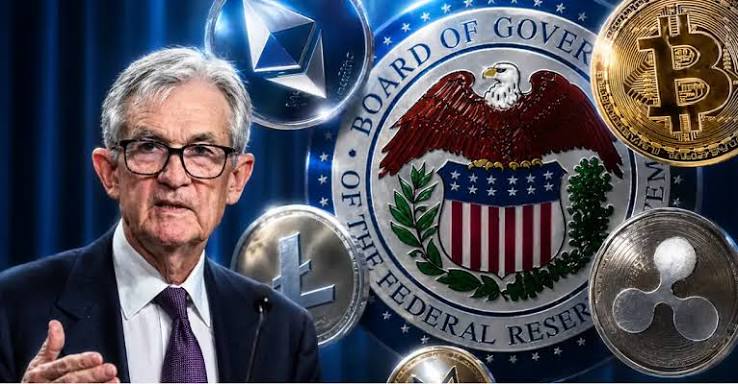
Fed Decision Could Move Bitcoin sharply as traders prepare for the Federal Reserve’s latest interest-rate announcement. The decision may influence the US dollar, Treasury yields, global liquidity and demand for risk-sensitive assets such as Bitcoin.
- How the Fed Decision Could Move Bitcoin
- Scenario 1: The Fed Holds Rates and Sounds Supportive
- Scenario 2: The Fed Holds Rates but Sounds Hawkish
- Scenario 3: The Fed Announces a Surprise Rate Increase
- Which Fed Scenario Is Best for Bitcoin?
- Important Signals to Watch After the Decision
- The US Dollar
- Treasury Yields
- Bitcoin ETF Flows
- Technology Stocks
- Bitcoin Trading Volume
- Leveraged Liquidations
- Could the Fed Decision Trigger a Bitcoin Crash?
- Can Bitcoin Rise Even After a Hawkish Decision?
- Frequently Asked Questions
- How Could the Fed Decision Move Bitcoin?
- What Time Is the Fed Decision?
- What Is the Current Federal Funds Rate?
- Will Bitcoin Rise if the Fed Holds Rates?
- What Happens to Bitcoin if the Fed Raises Rates?
- Should Investors React to the First Bitcoin Move?
- Conclusion
Bitcoin was trading near $64,443 at the time of writing after moving between approximately $62,772 and $64,640 during the day. The wide trading range suggests that volatility is already increasing before the Federal Reserve delivers its policy update.
The Federal Open Market Committee is holding its two-day meeting on July 28 and July 29, 2026. The policy decision is scheduled for 2:00 p.m. Eastern Time, followed by the press conference at 2:30 p.m. Eastern Time.
The headline interest-rate decision will be important, but Bitcoin investors must also examine the policy statement, voting split, inflation language and comments about future rate changes.
Three possible outcomes could determine whether Bitcoin breaks higher, remains volatile or experiences another decline.
How the Fed Decision Could Move Bitcoin
The Fed Decision Could Move Bitcoin because monetary policy affects the wider financial environment in which cryptocurrency investors operate.
Bitcoin is not controlled by the Federal Reserve, but its market value can still respond to changes in interest rates, liquidity and investor confidence.
Higher interest rates can make government bonds and other interest-paying investments more attractive. This may encourage investors to reduce exposure to volatile assets such as Bitcoin.
Higher rates can also strengthen the US dollar. Because Bitcoin is commonly priced in dollars, a stronger dollar may make it more difficult for BTC to maintain upward momentum.
Lower rates or supportive guidance can create the opposite reaction. Easier financial conditions may increase investor appetite for cryptocurrencies, technology shares and other growth-focused assets.
The Federal Reserve maintained the federal funds target range at 3.50% to 3.75% during its June meeting. The July decision will show whether policymakers remain comfortable with that range or believe further action is required.
Scenario 1: The Fed Holds Rates and Sounds Supportive
The first scenario is that the Federal Reserve leaves interest rates unchanged and delivers a relatively supportive message.
This would probably be the most positive outcome for Bitcoin.
A supportive statement could indicate that inflation pressures are becoming more manageable, economic conditions remain stable and an immediate rate increase is unnecessary.
Under this scenario, the Fed Decision Could Move Bitcoin higher as investors become more confident that monetary conditions will not tighten further.
A supportive decision could weaken the US dollar and reduce Treasury yields. That environment may encourage traders to rebuild exposure to Bitcoin and other risk-sensitive assets.
Bitcoin could initially challenge the $65,000 area. A sustained move above that level may improve short-term momentum and encourage buyers who remained on the sidelines before the announcement.

However, investors should not treat the first upward movement as confirmation of a lasting breakout.
Bitcoin can rise immediately after the policy statement and then reverse during the press conference. Traders often react first to the headline decision before studying the full details.
A healthier bullish reaction would involve Bitcoin holding its gains after the press conference and continuing to attract spot-market demand during the following trading session.
What Would Strengthen the Bullish Case?
The positive scenario would become stronger if the Federal Reserve keeps rates unchanged and avoids warning about an imminent increase.
Bitcoin could receive additional support if:
- The US dollar moves lower
- Treasury yields decline
- Technology stocks recover
- Spot Bitcoin ETF flows turn positive
- Bitcoin holds above $65,000 after the initial volatility
Renewed ETF inflows would be especially important because they could indicate that institutional investors are responding positively to the decision.
What Could Limit the Rally?
The unchanged-rate decision may already be partly reflected in Bitcoin’s price.
Traders who purchased BTC before the meeting could sell after the announcement to secure short-term profits. This is commonly described as buying the expectation and selling the confirmed event.
The rally could also fade if the Federal Reserve holds rates but continues expressing concern about inflation.
For that reason, the tone of the statement may matter more than the unchanged decision itself.
Scenario 2: The Fed Holds Rates but Sounds Hawkish
The second scenario is that the Federal Reserve maintains the current rate range but delivers a hawkish warning.
A hawkish message could indicate that inflation remains too high, financial conditions are too loose or another rate increase may be needed during a future meeting.
In this situation, the Fed Decision Could Move Bitcoin lower even though the central bank does not immediately raise interest rates.
Bitcoin may initially rise when traders see that rates remain unchanged. The price could then reverse as investors read the statement and listen to the press conference.
This scenario can create more confusion than a direct rate increase because the headline appears positive while the future policy signal remains negative.
Why a Hawkish Hold Could Pressure BTC
A hawkish statement may push Treasury yields higher and strengthen the US dollar.
Investors could conclude that borrowing costs will remain elevated for longer. This may reduce demand for Bitcoin and other assets that depend heavily on market liquidity and risk appetite.
Bitcoin could then move back towards the recent intraday low near $62,772. A brief test of that level would not automatically confirm a larger crash, but continued weakness below the area could damage short-term confidence.
The decline may become stronger if Bitcoin ETF outflows continue or technology shares experience another sell-off.
Leveraged traders would also face additional risk. A rapid Bitcoin decline could force exchanges to close long positions, adding further selling pressure.
What Investors Should Listen for
Investors should pay close attention to comments about:
- Inflation remaining above target
- Possible future interest-rate increases
- Energy prices and geopolitical risks
- Economic growth
- Labour-market strength
- The number of officials supporting tighter policy
The voting result may also affect Bitcoin.
A decision to hold rates could still appear hawkish if several policymakers prefer an increase. That voting split may lead markets to expect tighter policy at the next meeting.
Scenario 3: The Fed Announces a Surprise Rate Increase
The third scenario is that the Federal Reserve raises the target rate by 25 basis points.
This would likely create the strongest immediate negative reaction for Bitcoin.
The current target range is 3.50% to 3.75%. A quarter-point increase would raise it to 3.75% to 4.00%.
CME Group reported that federal funds futures reflected a meaningful possibility of a July increase shortly before the meeting, although unchanged rates remained a major possible outcome.
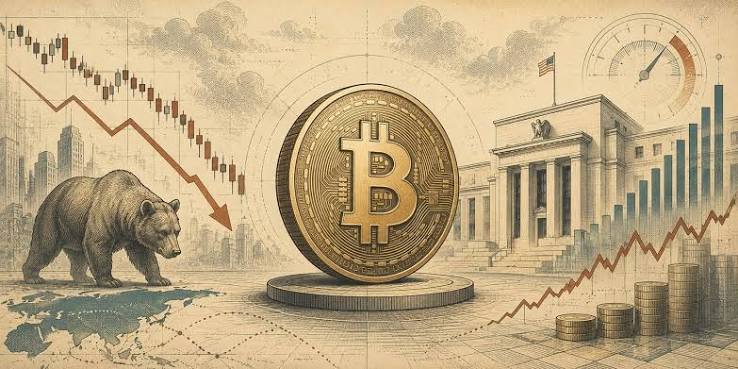
Because not every investor is positioned for an increase, a surprise hike could trigger a fast adjustment across cryptocurrency, stock, bond and currency markets.
Under this outcome, the Fed Decision Could Move Bitcoin sharply lower as investors move capital towards the US dollar, government bonds and other defensive assets.
Why a Rate Increase Could Hurt Bitcoin
An interest-rate increase may strengthen the dollar and raise Treasury yields.
Higher yields can make lower-risk assets more attractive compared with Bitcoin, which does not provide a guaranteed return.
A rate increase may also reduce expectations of easier financial conditions. Investors who were expecting additional liquidity could reduce their positions across cryptocurrency and technology markets.
Bitcoin may experience another wave of leveraged liquidations if the price drops quickly. Exchanges automatically close positions that no longer have sufficient collateral, creating forced selling.
That forced selling can accelerate the decline even when the original policy change does not directly affect Bitcoin’s network or long-term supply.
Could Bitcoin Recover After a Rate Increase?
Bitcoin could recover after the initial decline, but the strength of that recovery would depend on the Federal Reserve’s explanation.
A hike described as a one-time action may produce a sharp sell-off followed by stabilisation.
A hike combined with warnings about additional increases would create a more difficult environment. Traders may remain cautious if they believe borrowing costs could continue rising.
Bitcoin’s reaction during the day after the announcement may therefore provide a clearer signal than its first move.
Which Fed Scenario Is Best for Bitcoin?
A rate hold combined with supportive guidance would be the most favourable outcome for Bitcoin.
It could improve risk appetite, weaken the dollar and reduce concerns about further monetary tightening.
A hawkish hold would create a mixed environment. Bitcoin could initially rise before reversing as investors process the Federal Reserve’s future policy signal.
A surprise rate increase would present the greatest immediate downside risk.
However, the market response will not depend on the interest-rate decision alone. Bitcoin ETF flows, technology stocks, Treasury yields, the dollar and derivatives leverage will also influence the final outcome.
Important Signals to Watch After the Decision
The Fed Decision Could Move Bitcoin immediately, but the first price reaction may not reveal the true direction.
Investors should monitor several signals during and after the announcement.
The US Dollar
A sharp rise in the dollar could place pressure on Bitcoin. A weaker dollar may support demand for BTC and other risk-sensitive assets.
Treasury Yields
Higher Treasury yields may indicate that investors expect restrictive monetary policy to continue.
Falling yields could suggest that the market interprets the Federal Reserve’s message as supportive or less aggressive.
Bitcoin ETF Flows
ETF flows will show how institutional investors respond after the meeting.
Renewed inflows could support Bitcoin’s recovery. Continued outflows could make it harder for BTC to maintain higher prices.
Technology Stocks
Bitcoin frequently moves alongside technology and growth shares during periods of macroeconomic uncertainty.
A positive reaction across technology markets may support Bitcoin. Another technology sell-off could weaken crypto demand.
Bitcoin Trading Volume
A price breakout supported by strong trading volume is generally more convincing than a brief move created by thin liquidity.
Investors should examine whether buyers remain active after the first wave of volatility.
Leveraged Liquidations
Large liquidations can increase the speed of a Bitcoin move.
A sudden decline may force leveraged long positions to close, while a rapid rally can liquidate short positions and create additional buying pressure.
Could the Fed Decision Trigger a Bitcoin Crash?
One Federal Reserve announcement can trigger a sharp decline, but it does not automatically create a lasting Bitcoin crash.
A deeper correction would become more likely if several negative signals appear together.
These could include a surprise rate increase, a stronger dollar, rising Treasury yields, continued Bitcoin ETF outflows and heavy long-position liquidations.
The risk would also increase if Bitcoin falls below its recent low and fails to recover.
A temporary decline would appear less serious if buyers quickly return, ETF flows improve and Bitcoin holds above its key support area.
Investors should therefore evaluate the market response across several trading sessions rather than judging the outcome from the first few minutes.
Can Bitcoin Rise Even After a Hawkish Decision?
Bitcoin can sometimes recover after an apparently negative policy announcement.
Markets often move based on the difference between expectations and reality. A hawkish decision may already be partly reflected in prices before the announcement.
Bitcoin could also recover if the Federal Reserve raises rates but suggests that no additional increases are planned.
Another possibility is that traders initially sell Bitcoin and later return after reviewing the full statement.
However, a recovery is not guaranteed. Investors should look for confirmation through price stability, trading volume and institutional demand.
Frequently Asked Questions
How Could the Fed Decision Move Bitcoin?
The Federal Reserve decision can affect Bitcoin through changes in interest rates, the US dollar, Treasury yields, financial liquidity and investor appetite for risk.
What Time Is the Fed Decision?
The Federal Reserve’s policy statement is scheduled for 2:00 p.m. Eastern Time on July 29, 2026. The press conference is scheduled for 2:30 p.m. Eastern Time.
What Is the Current Federal Funds Rate?
Before the July decision, the federal funds target range is 3.50% to 3.75%. The Federal Reserve maintained this range during its June meeting.
Will Bitcoin Rise if the Fed Holds Rates?
Bitcoin may rise if the Federal Reserve holds rates and delivers supportive guidance. A hawkish statement could still cause BTC to decline even when the rate remains unchanged.
What Happens to Bitcoin if the Fed Raises Rates?
A rate increase could strengthen the dollar, raise Treasury yields and weaken demand for volatile assets. Bitcoin may experience immediate selling pressure and leveraged liquidations.
Should Investors React to the First Bitcoin Move?
The first move can be misleading because traders initially react to the headline. The press conference and subsequent market activity may provide a clearer indication of Bitcoin’s direction.
Conclusion
The Fed Decision Could Move Bitcoin significantly as traders prepare for three possible monetary-policy outcomes.
A rate hold with supportive guidance could help Bitcoin recover above recent resistance. A hawkish hold could produce an initial rise followed by renewed selling. A surprise rate increase would create the greatest immediate downside risk.
Bitcoin investors should monitor more than the headline interest-rate decision. The policy statement, voting split, press conference, US dollar, Treasury yields and ETF flows will help determine whether the first market reaction becomes sustainable.