
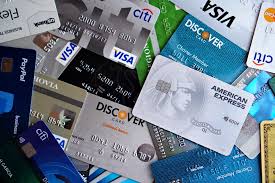
Here is the number that should reframe how you think about this: a $6,500 balance at today’s average interest rate, paid at the minimum, takes over eighteen years to clear.
Not eighteen months. Eighteen years — and you would pay more in interest than the original balance.
That is not a failure of discipline. It is arithmetic, and it is exactly how minimum payments are designed to work. The good news is that the same arithmetic runs in reverse: relatively modest changes to how you pay produce results that look disproportionate to the effort. This guide covers what actually accelerates How to Pay Off Credit Card Debt Faster in 2026 rate environment, in the order that produces the biggest effect for the least difficulty.
First, Understand What You’re Fighting
Credit card rates in 2026 remain near record territory. According to Federal Reserve data compiled by LendingTree, the average APR across all credit cards was 20.94% in Q2 2026. For cards actually carrying a balance, the figure was higher — 22.15%, up from 21.52% the previous quarter. New card offers averaged 23.79%.
Specific card types are worse. The CFPB has reported general-purpose cards averaging around 25.2% and private label store cards above 31%.
At 22% APR, a $6,500 balance generates roughly $1,430 in interest a year — about $4 every day, before you pay a cent toward the principal. That daily accrual is why progress feels invisible for months and why so many people conclude the effort isn’t working.
Some perspective on the scale of this: fewer than half of American cardholders — around 45% — carried a balance at any point in the past year. If you’re carrying one, you’re in a large group, not a moral category. And the trend is improving; 30-day delinquencies fell to 2.92% in Q1 2026, the seventh consecutive quarterly decline.
Step 1: Stop Paying the Minimum (The Single Highest-Impact Change)
Most issuers set minimums at around 2% of the balance or $25, whichever is larger. That structure guarantees a decade-plus repayment on any meaningful balance.
The mechanism is simple: as your balance falls, so does your required payment, which stretches the timeline indefinitely. Roughly 15% of general-purpose cardholders made only the minimum payment in a recent year — the highest share on record since 2015.
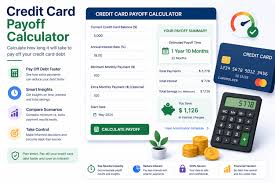
The fix costs nothing: set a fixed monthly payment and never reduce it as the balance falls. If your minimum today is $130, pay $130 every month regardless of what the statement says next month. That change alone can cut years off the timeline without adding a single dollar to your budget.
Better still, pay biweekly. Interest on most cards accrues daily on the average balance. Splitting your monthly payment in half and paying every two weeks lowers the average balance the interest is calculated on, and produces thirteen monthly-equivalent payments a year instead of twelve.
Step 2: Pick a Payoff Order — Avalanche or Snowball
With more than one card, the order you attack them in matters. Pay minimums on everything, then throw every spare dollar at one target.
The avalanche method targets the highest APR first. This is mathematically optimal — it minimises total interest paid and gets you out fastest. If you have a store card at 29% and a bank card at 19%, the store card is costing you dramatically more per dollar owed.
The snowball method targets the smallest balance first, regardless of rate. It costs more in interest, but it eliminates an entire account quickly, and behavioural research consistently finds people are more likely to stick with it.
Which to choose: if the rate gap between your cards is large — say ten points or more — avalanche is worth the discipline. If your balances are similar in rate, or if you’ve abandoned payoff plans before, snowball’s early win is worth the extra cost. The best method is the one you complete.
A hybrid that works well: clear one small balance first for the momentum, then switch to strict avalanche for everything remaining.
Step 3: Cut the Interest Rate Itself
This is where the biggest gains hide, and where most people never look.
Just ask your issuer
Roughly three in four people who request a rate reduction receive one, according to consumer survey data. Call the number on the back of the card, mention your payment history and any competing offers you’ve received, and ask directly.
A drop from 24% to 19% on a $6,000 balance saves around $300 a year — for one phone call. The worst outcome is that they say no, which leaves you exactly where you started.
0% balance transfer cards
The strongest tool available if your credit qualifies. Several major issuers currently offer introductory 0% APR periods on balance transfers running up to 21 months. During that window, every dollar you pay reduces principal instead of feeding interest.
Run the maths before you apply. Transfer fees are typically 3% for transfers made in an early promotional window, rising to 5% after. On a $6,000 transfer that’s $180 to $300 upfront — worth paying if the alternative is $1,300 a year in interest, but only if you clear the balance before the promotional period ends.
The three ways this goes wrong:
- You don’t pay it off in time and the rate reverts to something in the high teens to high twenties.
- You treat the freed-up limit on the old card as available money.
- You transfer, relax, and pay minimums — wasting the entire zero-interest window.
Set the payment at balance divided by promotional months, automate it, and don’t touch the old card.
Debt consolidation loans
A personal loan at a fixed rate replaces revolving debt with a defined end date. Qualified borrowers can typically access rates in the 8–15% range — a substantial improvement on 22%, though it depends heavily on your credit profile.
The structural advantage is the fixed term: the loan forces the payoff schedule that a credit card leaves optional. The structural risk is that your cards are now empty and the temptation to use them is real. A meaningful share of people who consolidate end up with both a loan and fresh card balances.
Step 4: Find the Money to Throw at It
Rate reduction gets you leverage. Extra payments get you speed.
Audit subscriptions properly. Not the obvious streaming services — the annual renewals you forgot about, the free trials that converted, the app subscriptions charged to a card you barely check.
Redirect windfalls entirely. Tax refunds, bonuses, gifts, side income. This is the single fastest lever most people have, and the one most often absorbed into ordinary spending.
Sell the things you already own. The unused equipment, the clothes, the hobby gear from an abandoned phase.
Look at income, not just expense. There is a hard floor on how much you can cut and no ceiling on what you can earn. A few hours of freelance work, overtime, or contract income directed exclusively at debt often beats months of aggressive budgeting.
Pause retirement contributions above any employer match — carefully. Paying down 22% debt beats an expected 8% market return, so the maths favours debt. But never give up an employer match; that is an immediate guaranteed return no debt payoff can beat.
Read More: Best ETFs to Invest in 2026 for Long-Term Returns
Step 5: Stop the Bleeding
None of the above works if the balance keeps growing.
- Take the cards out of circulation. Remove them from your phone’s wallet and from saved browser payments. Friction is the point.
- Watch buy-now-pay-later. BNPL obligations stacked on top of card balances have been a significant driver of rising revolving debt. They feel separate. They aren’t.
- Build a small buffer first. Save $500 to $1,000 before going all-in on payoff. Without it, the first car repair goes straight back on the card and undoes months of work. This is why aggressive payoff plans fail more often than they succeed.
If You’re Genuinely Struggling
More than half of Americans carrying balances in 2026 are doing so to cover essentials — groceries, utilities, healthcare. Demand for credit counselling has risen sharply, up roughly 24% year on year.
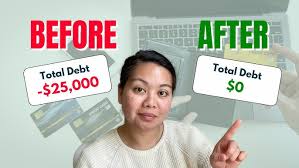
If the payment is not achievable on your current income, the tools above are not enough on their own. Real options exist:
- Issuer hardship programmes. Most major banks have them. They can reduce rates substantially or pause interest temporarily. They are not advertised — you have to ask.
- Non-profit credit counselling. Reputable agencies offer free consultations and can arrange debt management plans with negotiated rates. In the US, look for agencies accredited by the NFCC.
- Be extremely careful with debt settlement companies. Advance-fee arrangements, damaged credit, and unresolved debt are common outcomes. Non-profit counselling first.
Getting advice early is materially better than getting it after a charge-off, which stays on your credit report for seven years.
FAQs
What is the fastest way to pay off credit card debt? Lower the interest rate first — through a 0% balance transfer, a consolidation loan, or a negotiated reduction — then apply the avalanche method with a fixed payment that never decreases. Rate reduction plus fixed payments compounds; either alone is much slower.
Is it better to pay off one card at a time or spread payments? One at a time. Pay minimums on everything else and concentrate every extra dollar on a single target. Spreading extra money across all cards slows all of them equally.
Do balance transfers hurt your credit score? The application causes a small temporary dip from the hard inquiry. Longer term, most people see improvement, because a higher total credit limit reduces credit utilisation — provided you don’t run the old cards back up.
Should I use savings to pay off credit card debt? Mathematically, yes — no savings account pays anything close to 22%. Practically, keep a small emergency buffer so an unexpected expense doesn’t send you straight back to the card.
How long does it realistically take? Depends entirely on balance and payment. As a benchmark: minimum payments on an average balance run to roughly 18 years. Doubling that payment typically brings it under three.
Will paying off debt improve my credit score? Usually significantly, because credit utilisation is one of the largest scoring factors. Keep the accounts open after payoff — closing them reduces your available credit and can lower your score.
Conclusion
Paying off credit card debt faster in 2026 comes down to three moves, in order of impact: cut the rate, fix the payment so it never falls, and stop new debt from arriving.
The environment is unhelpful — rates near record highs, essentials expensive — and none of that is your fault. But the compounding that works against you at 22% works just as hard for you the moment the balance starts falling. The first few months feel like nothing is happening. Then the interest portion of each payment shrinks, the principal portion grows, and the timeline collapses faster than the early progress suggests.