
The SpaceX Stock Outlook has shifted from rockets and satellite internet toward artificial intelligence after Elon Musk said the company could reach AI “pole position” in about six months. Investors now must decide whether faster model development and expanding compute capacity justify SpaceX’s valuation and heavy spending.
- Why Musk’s Six-Month AI Target Matters
- How SpaceX Became an AI Investment
- SpaceX’s Current Financial Position
- The Bull Case for SpaceX Stock
- Rapidly Growing AI Revenue
- Vertical Integration
- Starlink Provides an Established Revenue Base
- SpaceX Has Demonstrated Engineering Scale
- The Bear Case and Major Risks
- AI Spending Could Overwhelm Revenue Growth
- Musk’s Timeline May Be Too Aggressive
- Competition Will Continue Moving
- Starlink and Starship Still Carry Execution Risk
- Valuation Leaves Less Room for Disappointment
- Key-Person and Governance Risk
- What Could Move SpaceX Stock Next?
- SpaceX Stock Outlook: Bull, Base and Bear Scenarios
- How Investors Can Evaluate the Opportunity
- 1. Define AI Leadership
- 2. Track Growth Against Spending
- 3. Evaluate Each Business Separately
- 4. Demand a Margin of Safety
- Is SpaceX Stock a Buy?
- Frequently Asked Questions
- What is the outlook for SpaceX stock?
- Did Elon Musk say SpaceX would lead AI within six months?
- Why is SpaceX involved in artificial intelligence?
- What is SpaceX’s stock symbol?
- What is the biggest risk for SpaceX shareholders?
- Is Starlink still important to SpaceX’s valuation?
- Could AI become more important than SpaceX’s rocket business?
- How should investors judge the six-month AI claim?
- Conclusion
Musk’s target is conditional, not a guaranteed milestone. A useful outlook therefore weighs AI momentum against operating losses, capital requirements, Starlink performance, Starship execution, competition, and stock volatility before drawing any investment conclusion.
Why Musk’s Six-Month AI Target Matters
On September 24, 2026, Musk said SpaceX’s AI work was approximately three years old, compared with six years for Anthropic and 10 years for OpenAI. He argued that SpaceX could reach the industry’s “pole position” in roughly six months if its rate of improvement remains strong.
Reports also indicated that Musk expects SpaceX to produce a model comparable with Anthropic’s Fable or OpenAI’s GPT-6 within two to three months. The six-month target refers to potential leadership after that milestone, rather than a confirmed launch date or independently verified performance forecast.
For investors, the distinction is important. A rapidly improving model can strengthen market sentiment, but AI leadership must eventually produce:
- Competitive benchmark results
- Reliable enterprise products
- Sustainable customer demand
- Attractive margins
- Revenue that justifies infrastructure spending
- Defensible advantages over other AI developers
A prediction alone does not establish any of these outcomes.
Read More: How Crypto Mining Works in 2026: Costs, Rewards and Risks
How SpaceX Became an AI Investment
SpaceX is no longer valued solely as a rocket-launch and satellite-internet company. Its February 2026 acquisition of xAI brought Grok, the X platform and large-scale computing infrastructure into the wider business. SpaceX describes the combined organization as an integrated operation spanning space, connectivity and artificial intelligence.
The transformation gives SpaceX three principal growth engines:
| Business | Main economic role | Key investor question |
|---|---|---|
| Starlink | Subscription-based connectivity revenue | Can subscriber growth and margins remain strong? |
| Launch and Starship | Launch services, government missions and future transportation | Can Starship become reliable and commercially productive? |
| AI and compute | Grok models, AI products and infrastructure services | Can revenue grow fast enough to support enormous capital requirements? |
This combination creates unusual diversification. However, it also makes SpaceX stock harder to value because telecommunications, aerospace and AI infrastructure businesses normally command different valuation multiples and carry different risks.
SpaceX’s Current Financial Position
SpaceX reported second-quarter 2026 revenue of $7.8 billion, up from $4.1 billion one year earlier. Starlink generated more than half of total revenue, while AI revenue increased by approximately 250%. The company’s space-related revenue grew 29%.
The AI business generated approximately $2.6 billion in quarterly revenue, but it remained unprofitable on an operating basis. SpaceX also reported a $541 million quarterly net loss.
These results show meaningful commercial traction, but they do not yet prove that the AI division can generate durable profits.
Capital Spending Is the Central Issue
Total quarterly capital expenditure exceeded $18 billion, including $15.83 billion directed toward AI infrastructure. Management indicated that similarly elevated spending could continue during the following two quarters.
SpaceX argues that new compute capacity can be monetized quickly. Investors remain concerned that the company could face continued negative free cash flow if infrastructure costs rise faster than AI revenue.
The central investment question is therefore not simply whether SpaceX can build a leading AI model. It is whether every dollar invested in chips, energy, cooling and data centers can produce an attractive financial return.
The Bull Case for SpaceX Stock
Rapidly Growing AI Revenue
AI revenue more than tripled year over year in the second quarter. That growth suggests SpaceX is monetizing computing infrastructure while developing its own models rather than waiting for Grok alone to generate returns.
Compute contracts can help offset development costs, improve infrastructure utilization and diversify revenue beyond consumer AI subscriptions.
Vertical Integration
SpaceX controls assets that most AI developers do not possess under one organization:
- AI models and applications through xAI and Grok
- Real-time content and distribution through X
- Large-scale computing infrastructure
- Energy procurement and engineering capabilities
- Starlink’s global communications network
- Launch systems and potential orbital infrastructure
Vertical integration could reduce dependence on external suppliers and allow SpaceX to coordinate infrastructure, distribution and product development more rapidly.
That advantage is promising, but it must still translate into lower costs, stronger products or higher margins.
Starlink Provides an Established Revenue Base
Starlink remains an important foundation for the SpaceX investment case. Its recurring connectivity revenue can support research, satellite deployment and infrastructure expansion while newer businesses develop.
Second-quarter Starlink revenue rose 66%, and the service reached 12 million subscribers.
Investors should track subscriber additions alongside average revenue per user. Rapid customer growth is less valuable if lower-priced plans or high network costs weaken profitability.
SpaceX Has Demonstrated Engineering Scale
SpaceX has a history of manufacturing reusable rockets, operating a major satellite constellation and completing frequent launches. Those capabilities do not guarantee AI leadership, but they support Musk’s argument that the company can execute difficult infrastructure projects quickly.
The company expects to expand its computing capacity beyond two gigawatts in 2026 and toward 10 gigawatts by the end of 2027. These are management targets, so investors should compare future disclosures with the proposed schedule.
The Bear Case and Major Risks
AI Spending Could Overwhelm Revenue Growth
SpaceX’s $15.83 billion of quarterly AI capital spending substantially exceeded its $2.6 billion in quarterly AI revenue. These figures are not directly comparable because infrastructure can generate revenue for years, but the gap illustrates the scale of the investment.
The strategy becomes more credible if utilization remains high and contracted revenue converts into cash. It becomes riskier if demand slows, hardware becomes obsolete quickly or operating costs exceed expectations.
Musk’s Timeline May Be Too Aggressive
“AI leadership” has no universally accepted definition. It could refer to benchmark performance, user adoption, enterprise revenue, compute capacity, scientific reasoning or another measure.
Consequently, SpaceX could claim progress without becoming the clear leader across every category. Investors should seek measurable results rather than relying on a broad six-month target.
Competition Will Continue Moving
OpenAI, Anthropic, Google DeepMind and other AI developers will not remain static while SpaceX improves Grok. Matching a competitor’s current model several months later may not establish leadership if that competitor releases a stronger system during the same period.
SpaceX must improve faster than the industry, not merely faster than its own previous models.
Starlink and Starship Still Carry Execution Risk
Starlink must finance network expansion while defending its position against telecommunications and satellite competitors. Starship requires continued technical progress before it can support many of SpaceX’s most ambitious launch and orbital-computing plans.
Delays, launch failures, regulatory restrictions or unexpected development costs could affect investor confidence even if the AI division performs well.
Valuation Leaves Less Room for Disappointment
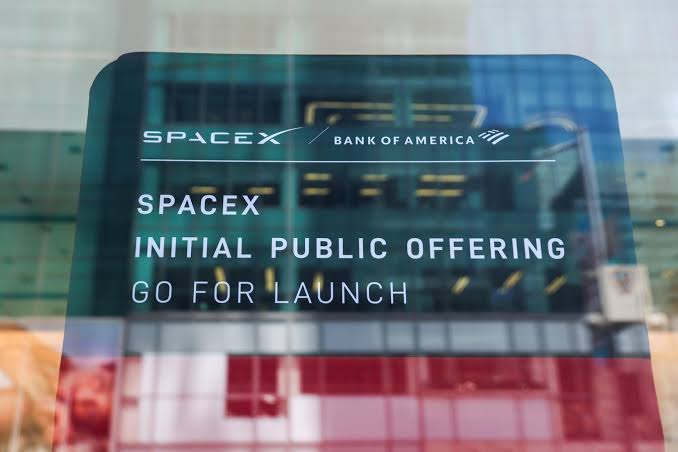
SpaceX completed its June 2026 IPO at $135 per share and an approximate $1.77 trillion valuation. The shares subsequently experienced substantial volatility as investors reassessed AI spending and the company’s cash requirements.
At a high valuation, strong growth may already be reflected in the share price. Results that are merely good—not exceptional—can therefore produce a negative market reaction.
Key-Person and Governance Risk
SpaceX’s strategy remains closely associated with Musk’s leadership, forecasts and capital-allocation decisions. This creates key-person risk and may increase share-price sensitivity to his public statements.
Investors should evaluate governance, related-party transactions and management accountability alongside technological progress.
What Could Move SpaceX Stock Next?
The following developments are more informative than short-term social-media excitement:
- Independent AI benchmarks: Evidence that new Grok models match or outperform competing frontier systems.
- AI segment margins: Progress from revenue growth toward sustainable operating profitability.
- Compute utilization: Confirmation that newly installed infrastructure is serving paying customers.
- Capital expenditure: Whether spending stabilizes or continues rising faster than revenue.
- Starlink economics: Subscriber growth, pricing, churn and average revenue per user.
- Starship milestones: Successful testing, reusability and commercial deployment.
- Enterprise contracts: New agreements, renewals and reduced customer concentration.
- Cash flow: Improvement in operating cash generation and free cash flow.
- Share dilution and debt: Additional financing that could affect shareholder returns.
- Management guidance: Clear targets followed by measurable execution.
SpaceX Stock Outlook: Bull, Base and Bear Scenarios
Exact price targets would require assumptions about future earnings, dilution, interest rates and valuation multiples. A scenario framework is more useful than pretending a precise forecast is certain.
| Scenario | What would need to happen | Likely stock implication |
|---|---|---|
| Bull case | Grok reaches frontier performance, AI contracts expand, compute stays highly utilized and Starlink remains strong | Revenue expectations rise and investors may accept a premium valuation |
| Base case | AI improves but does not clearly lead, revenue grows and heavy spending continues | Volatility persists while the stock depends on quarterly execution |
| Bear case | Model progress disappoints, compute demand weakens or costs remain far above revenue | Valuation compresses as investors focus on cash burn and financing risk |
The six-month AI goal strengthens the bull case only if SpaceX supplies objective performance results and financial evidence.
How Investors Can Evaluate the Opportunity
Investors considering SpaceX should separate business quality from stock attractiveness. An innovative company can still be an expensive investment if its share price assumes years of exceptional execution.
A disciplined assessment can follow four steps:
1. Define AI Leadership
Choose measurable criteria such as model benchmarks, enterprise adoption, AI revenue, operating margin and compute utilization. Avoid treating management language as a standardized measurement.
2. Track Growth Against Spending
Compare quarterly AI revenue growth with AI capital expenditure and operating losses. Revenue should eventually grow faster than the ongoing cost required to support it.
3. Evaluate Each Business Separately
Estimate the value and risks of Starlink, launch services, Starship and AI individually. This prevents excitement around one division from obscuring weakness in another.
4. Demand a Margin of Safety
Consider how much disappointment the current valuation can absorb. A wider margin of safety reduces dependence on every management target being achieved on schedule.
Is SpaceX Stock a Buy?
SpaceX offers exposure to several potentially transformative markets, including satellite broadband, reusable launch systems, AI infrastructure and frontier models. Its engineering record and rapidly growing revenue provide a credible foundation for long-term optimism.
However, the current investment case also requires confidence in extraordinary spending, aggressive timelines and multiple developing businesses. Musk’s six-month prediction is a catalyst, not sufficient evidence for a buy decision.
SpaceX stock may suit investors who accept high volatility, long investment horizons and significant execution risk. More conservative investors may prefer to wait for improving AI margins, moderated capital expenditure and clearer evidence of model leadership.
Frequently Asked Questions
What is the outlook for SpaceX stock?
The outlook is growth-oriented but highly speculative. AI and Starlink could support substantial revenue expansion, while heavy capital spending, operating losses, valuation and execution risks may continue producing volatility.
Did Elon Musk say SpaceX would lead AI within six months?
Musk said SpaceX could reach AI “pole position” in about six months if its current acceleration continues. It was a conditional prediction, not a guaranteed deadline.
Why is SpaceX involved in artificial intelligence?
SpaceX acquired xAI in February 2026, adding Grok, X and AI infrastructure to its rocket, satellite and connectivity operations. The company views AI as a major future growth engine.
What is SpaceX’s stock symbol?
SpaceX trades on Nasdaq under the ticker SPCX following its June 2026 public offering.
What is the biggest risk for SpaceX shareholders?
The most immediate risk is that enormous AI and infrastructure spending may not generate revenue and cash flow quickly enough to justify the company’s valuation.
Is Starlink still important to SpaceX’s valuation?
Yes. Starlink supplies recurring connectivity revenue and remains one of SpaceX’s most established commercial businesses. Its growth and profitability are especially important while AI and Starship require substantial investment.
Could AI become more important than SpaceX’s rocket business?
Yes. AI revenue is growing rapidly and already represents a meaningful part of the company. Whether it becomes the dominant source of long-term value will depend on customer demand, margins and infrastructure returns—not revenue growth alone.
How should investors judge the six-month AI claim?
Investors should look for independently verifiable benchmarks, product adoption, enterprise contracts, segment margins and compute utilization. Those indicators are more meaningful than a management forecast by itself.
Conclusion
The SpaceX Stock Outlook combines exceptional growth potential with equally significant execution and valuation risks. Musk’s ambition to reach AI leadership within six months could strengthen the company’s long-term position, but investors need evidence in model performance, margins, compute demand and cash flow. SpaceX’s opportunity is substantial; its spending requirements and aggressive expectations mean disciplined evaluation remains essential.