
Tensions in the Middle East have entered a new and potentially dangerous phase as the Pentagon reportedly prepares contingency plans for extended, limited ground operations inside Iran. According to reporting by The Washington Post, these plans fall short of a full-scale invasion but could involve targeted raids, special operations missions, and the deployment of conventional infantry units over a period of weeks.
- A Shift Toward Ground Engagement
- Strategic Importance of Kharg Island and the Strait of Hormuz
- Deployment of US Forces in the Region
- Risks Facing US Troops
- Political Calculations in Washington
- Iran’s Response and Escalating Rhetoric
- Threat of a Wider Regional Conflict
- Pakistan’s Role as a Mediator
- Timeline and Military Objectives
- FAQs
- Is the United States planning a full invasion of Iran?
- Why is Kharg Island significant?
- What risks do US troops face in Iran?
- Could this conflict spread to other regions?
- What role is Pakistan playing in the crisis?
- Conclusion
While no final authorization has been given by Donald Trump, the preparations signal a significant escalation in military readiness amid an already volatile regional conflict.
A Shift Toward Ground Engagement
For weeks, the United States has relied primarily on airstrikes, naval deployments, and regional deterrence strategies. However, recent developments suggest a pivot toward potential ground-based operations—albeit limited in scope.
Officials familiar with internal discussions indicate that the proposed missions could include:
- Special operations raids on strategic Iranian infrastructure
- Temporary seizure of key locations such as Kharg Island
- Targeted strikes on coastal weapons systems near the Strait of Hormuz
- Intelligence-driven operations to disrupt missile and drone capabilities
Unlike a full invasion, these actions would likely be surgical, time-bound, and designed to achieve specific military objectives rather than regime change.
Strategic Importance of Kharg Island and the Strait of Hormuz
One of the central points of discussion within US defense circles is the potential targeting of Kharg Island. This small but crucial island serves as Iran’s primary oil export terminal, making it a vital economic lifeline.
Similarly, the Strait of Hormuz—through which roughly a fifth of the world’s oil supply passes—remains a focal point of global concern. Any disruption here could have immediate and severe consequences for international energy markets.
Military planners are reportedly considering operations aimed at:
- Securing shipping lanes
- Neutralizing anti-ship missile systems
- Preventing Iranian interference with global trade routes
Such moves would not only impact Iran but could ripple across global economies.
Deployment of US Forces in the Region
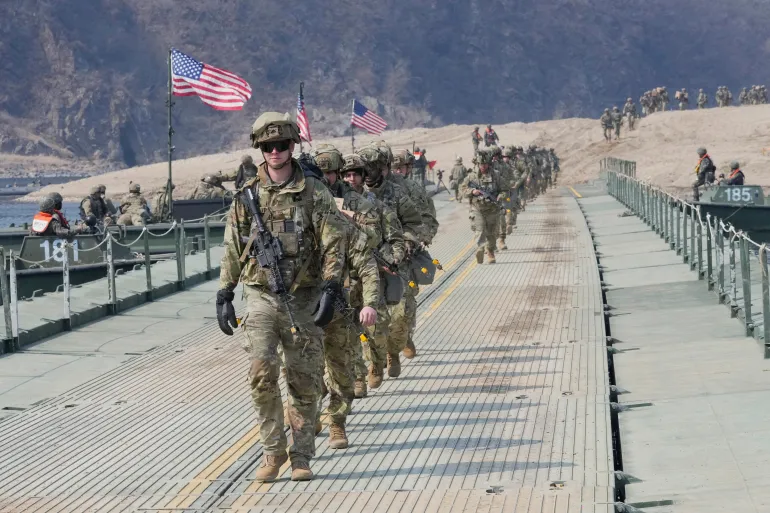
The buildup of US forces in the region has already begun. The United States Central Command confirmed the arrival of approximately 3,500 additional troops aboard the USS Tripoli.
These forces include members of the 31st Marine Expeditionary Unit, equipped with:
- Amphibious assault vehicles
- Strike fighter aircraft
- Tactical support systems
In addition, the Pentagon is reportedly preparing to deploy elements of the elite 82nd Airborne Division, known for rapid-response operations in high-risk environments.
The presence of these forces underscores the seriousness of the situation and provides the United States with a range of operational options.
Risks Facing US Troops
Despite their advanced capabilities, US forces would face significant risks if deployed on Iranian soil. Military analysts highlight several key threats:
- Iranian drone swarms capable of surveillance and attack
- Ballistic and cruise missile strikes
- Ground-based ambushes and improvised explosive devices (IEDs)
- Cyber and electronic warfare disruptions
Iran has spent years developing asymmetric warfare capabilities designed specifically to counter technologically superior adversaries.
This means even limited incursions could result in substantial casualties and unintended escalation.
Political Calculations in Washington
The decision to initiate ground operations ultimately rests with President Donald Trump. However, officials emphasize that military planning does not equate to political approval.
White House Press Secretary Karoline Leavitt stated that the Pentagon’s role is to provide “maximum optionality” to the Commander-in-Chief.
Within Washington, debates continue over:
- The potential benefits of limited strikes
- The risk of broader regional war
- Domestic political implications
- International legal considerations
Some factions support decisive action to weaken Iran’s military capabilities, while others warn of a prolonged and costly conflict.
Iran’s Response and Escalating Rhetoric
Iranian leaders have responded with defiance and warnings of severe retaliation. Mohammad Bagher Ghalibaf accused the United States of pursuing diplomacy publicly while secretly preparing for war.
In a series of statements, Iranian officials claimed:
- Iranian forces are prepared for ground confrontation
- US troops would face immediate and intense resistance
- Regional allies of the US could also become targets
Iran has also hinted at expanding the conflict beyond its borders.
Threat of a Wider Regional Conflict
One of the most alarming aspects of the situation is the possibility of the conflict spreading to other strategic areas.
Iranian-linked sources have suggested that new fronts could open in:
- The Bab al-Mandeb Strait
- The Red Sea shipping corridor
- Neighboring countries hosting US forces
The involvement of groups such as the Houthis in Yemen could further complicate the situation, potentially disrupting global shipping routes and increasing the risk of a multi-front war.
Pakistan’s Role as a Mediator
Amid rising tensions, Pakistan has stepped in as a diplomatic intermediary. Sharing a 900-kilometer border with Iran, Pakistan has a vested interest in preventing further escalation.
Islamabad is hosting high-level talks involving foreign ministers from:
- Saudi Arabia
- Turkey
- Egypt
These discussions aim to de-escalate tensions and explore diplomatic solutions before the situation spirals further out of control.
Timeline and Military Objectives
According to officials cited in reports, the potential operations would likely last:
- Several weeks
- Possibly up to a few months
The objectives are expected to remain limited and focused, including:
- Disrupting Iran’s military infrastructure
- Deterring further attacks on shipping
- Demonstrating US military resolve
However, history has shown that even limited operations can evolve into prolonged engagements.
Global Implications
The implications of US ground operations in Iran extend far beyond the region. Potential consequences include:
- Sharp increases in global oil prices
- Disruptions to international trade
- Increased geopolitical polarization
- Strain on US alliances
Countries around the world are closely monitoring developments, aware that any escalation could have far-reaching effects.
Read More: Dubai airport, iconic Burj Al Arab hotel damaged in Iranian missile strikes
FAQs
Is the United States planning a full invasion of Iran?
No, current plans reportedly focus on limited ground operations rather than a full-scale invasion. These would involve targeted missions with specific objectives.
Why is Kharg Island significant?
Kharg Island is Iran’s main oil export hub. Controlling or disabling it could significantly impact Iran’s economy and its ability to fund military operations.
What risks do US troops face in Iran?
US forces could face drones, missiles, ambushes, and improvised explosives. Iran’s asymmetric warfare tactics make ground operations particularly dangerous.
Could this conflict spread to other regions?
Yes, there is a real risk of escalation. Iran has hinted at opening new fronts in areas like the Bab al-Mandeb Strait and involving regional allies.
What role is Pakistan playing in the crisis?
Pakistan is acting as a mediator, hosting diplomatic talks to reduce tensions and prevent a broader conflict.
Conclusion
The Pentagon’s preparations for potential ground operations in Iran mark a critical turning point in an already volatile conflict. While the plans are limited in scope, their implications are anything but small.From strategic النفط routes like the Strait of Hormuz to geopolitical tensions involving multiple nations, the stakes are extraordinarily high. The involvement of global and regional powers, combined with Iran’s readiness to retaliate, creates a fragile and unpredictable situation. Ultimately, the decision lies with President Donald Trump, whose choice could either trigger a new phase of conflict or open the door for diplomacy. As military forces mobilize and diplomatic channels remain active, the world watches closely—aware that the next move could reshape the balance of power in the Middle East for years to come.