

The fragile ceasefire between the United States and Iran is facing its most serious test yet after the US military launched another wave of strikes on Iranian territory. The latest attacks came just one day after a previous round of US strikes, raising fears that both countries could be moving back toward full-scale war.
According to reports, Wednesday’s escalation targeted several Iranian cities, including Iranshahr, Bandar Abbas, Konarak, Chabahar, Bushehr and Aq Qala. The strikes marked the most intense military action since Washington and Tehran signed a memorandum of understanding in mid-June that had brought a temporary end to fighting.
CENTCOM Says 90 Iranian Targets Were Hit
US Central Command said it completed an additional round of strikes against Iran to weaken Tehran’s ability to threaten commercial shipping and civilian mariners in the Strait of Hormuz. CENTCOM said 90 Iranian military targets were hit, including air defence systems, coastal surveillance assets, missile and drone storage sites, naval capabilities and military logistics infrastructure along Iran’s coastline.
Iranian state media reported that one firefighter was killed in an attack on Iranshahr airport. Iranian officials also said strikes in Chabahar hit a maritime control tower and a depot, while state media reported that a railway bridge was targeted in Aq Qala.
Iran Responds With Attacks on US Bases
Hours after the US strikes, air raid sirens sounded in Bahrain, while Kuwait’s Ministry of Defence said its air defences were confronting rocket and drone attacks. Iran’s Revolutionary Guards later claimed responsibility for attacks on two US bases in Kuwait and two in Bahrain, warning that future responses could target other US bases in the region if Washington continues its military campaign.
The exchange has quickly widened the crisis beyond Iran’s borders. With US military facilities spread across the Gulf, any further Iranian retaliation could increase the risk of a broader regional conflict. Bahrain, Kuwait and other Gulf states now face the possibility of being drawn more directly into the confrontation.
Why the Ceasefire Is Breaking Down
The latest violence is rooted in competing interpretations of the memorandum of understanding signed in June. The agreement ended the war, lifted the US naval blockade on Iran and reopened the Strait of Hormuz. However, it left major issues unresolved, including Iran’s nuclear programme and the administration of the strait during a 60-day negotiating period.
The main dispute appears to centre on a clause requiring Iran to make arrangements for the safe passage of commercial vessels through the Strait of Hormuz. Iran has interpreted this as giving it responsibility for determining how ships pass through the waterway. Washington, however, argues that the agreement requires free and unfettered passage for commercial shipping.
This disagreement has turned the Strait of Hormuz into the centre of the crisis. For the United States, the waterway is an international route essential to the global economy. For Iran, it is a strategic pressure point that gives Tehran leverage in negotiations.
Tuesday’s Strikes Set the Stage
The latest US attacks followed a previous round of strikes on Tuesday. Washington said those strikes were carried out in response to Iranian attacks on three commercial vessels passing through the Strait of Hormuz. CENTCOM said more than 80 targets were hit with precision munitions before the operation ended roughly four hours later.
Iranian state media reported that eight members of Iran’s air force and navy were killed in Tuesday’s attacks, which struck the southern cities of Bandar Abbas and Bushehr.
Trump Warns of Stronger Action
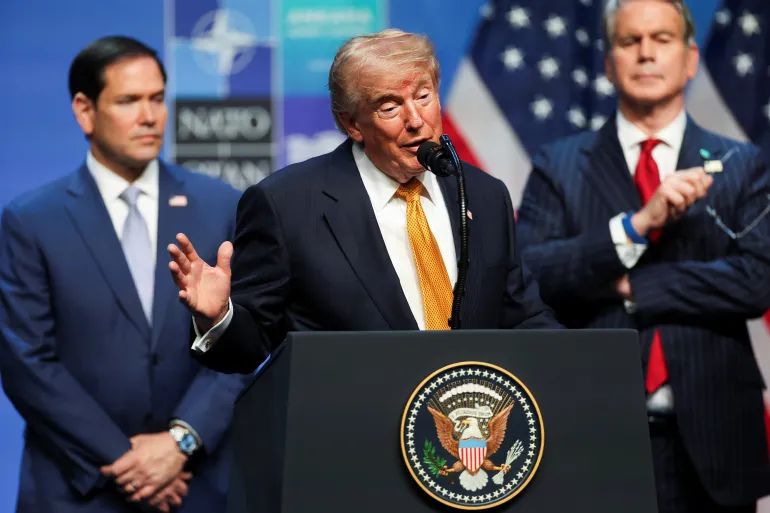
President Donald Trump has taken a hard line, saying the ceasefire is effectively over and warning that the US will respond forcefully to any Iranian attack. Speaking to reporters, he said the US had hit Iran “very hard” and suggested that any future Iranian strike would be met with a much larger American response.
At the same time, Trump has also suggested that he does not want a return to full-scale war and that negotiations may still continue. This creates a tense and uncertain situation: both sides are still leaving room for diplomacy, but their military actions are making a peaceful outcome harder to achieve.
Political Opposition Grows in Washington
The new strikes have also drawn criticism inside the United States. Senator Bernie Sanders warned that a return to war would cost more lives and waste more taxpayer dollars, while Senator Elizabeth Warren condemned Trump’s handling of the conflict and said the war with Iran had already cost American lives.
This domestic pressure could become more important if the conflict expands. A prolonged war with Iran would likely face intense scrutiny from Congress, especially if US bases, troops or commercial interests in the Gulf remain under threat.
What Happens Next?
The next phase depends on whether Washington and Tehran choose escalation or restraint. If Iran continues attacking US bases or commercial vessels, the United States is likely to respond with more strikes. If the US expands its campaign further, Iran may target additional American positions across the Gulf.
For now, the ceasefire appears deeply damaged. The memorandum of understanding that was meant to pause the conflict has instead become another point of disagreement. Unless both sides return to negotiations quickly, the region could face a dangerous new cycle of attack and retaliation.
The latest US wave of strikes on Iran shows how fragile the ceasefire has become. What began as a dispute over shipping access in the Strait of Hormuz is now threatening to reignite a wider war, with serious consequences for Iran, the United States, Gulf states and the global economy.
Conclusion
The new wave of US strikes on Iran shows how quickly a fragile ceasefire can collapse when military pressure, political mistrust and unresolved security disputes remain in place. What was meant to be a temporary pause in fighting has now become a dangerous cycle of attack and retaliation, with the Strait of Hormuz at the centre of the crisis.
For the United States, the priority is protecting commercial shipping and maintaining free passage through a vital global trade route. For Iran, control over maritime arrangements has become a powerful tool of leverage. Unless both sides return to serious negotiations, the conflict could expand beyond Iran and place the wider Gulf region at greater risk.