

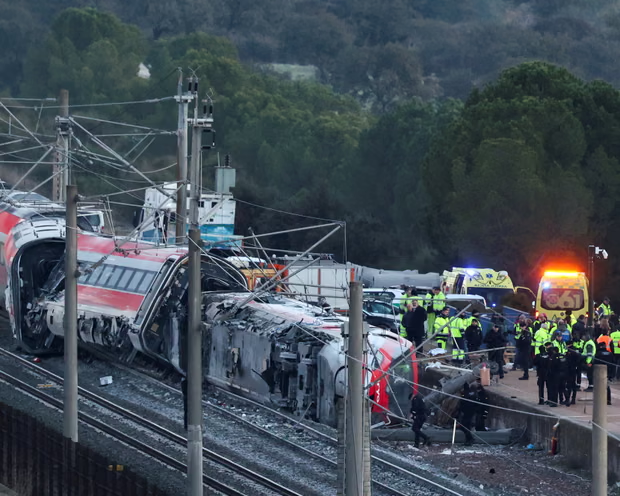
At least 39 people have been killed and 12 remain in intensive care after a catastrophic collision between two trains in southern Spain on Sunday night. The incident occurred near Adamuz, a municipality in the Córdoba province, and has been described by Spanish Prime Minister Pedro Sánchez as “a night of deep pain for our country.”
- The Collision: How It Happened
- The Human Toll: Victims, Survivors, and Families
- Emergency Response: A Race Against Time
- Technical Questions: What Caused the Derailment?
- National Reaction: Grief and Political Shock
- Survivor Accounts: The Reality of the Crash
- Local Community Impact: A Small Town Under Pressure
- Rail Operations Halted: Major Disruption in Spain
- Spain’s Worst Rail Accident Since 2013
- Why This Crash Matters: Beyond the Numbers
- The Investigation: What Authorities Will Examine
- The Wider Implications for Spain’s Rail Industry
- The Path Forward: A Nation in Mourning
- FAQ’s
- Conclusion
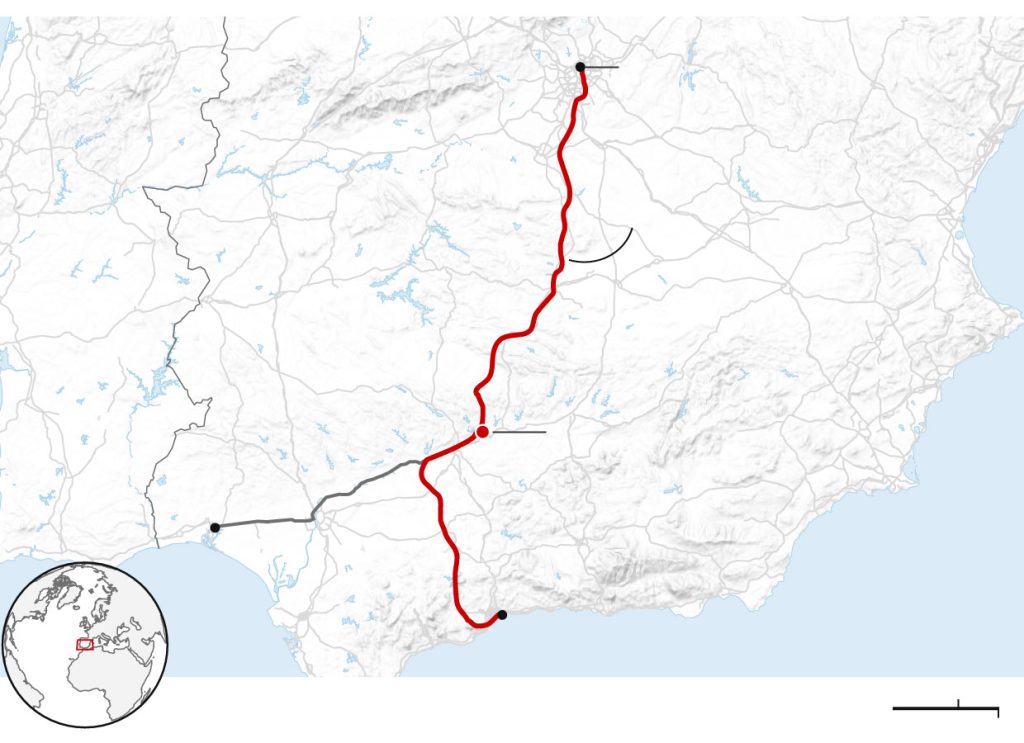
The collision involved a high-speed Iryo train traveling from Málaga to Madrid and a state-operated Renfe train traveling from Madrid to Huelva. The accident has prompted a national outpouring of grief and raised urgent questions about rail safety, infrastructure maintenance, and the effectiveness of emergency response systems.
The Collision: How It Happened
According to Adif, Spain’s rail infrastructure authority, the Iryo train derailed at approximately 7:40 p.m., crossing onto the opposite track and colliding head-on with the oncoming Renfe train. The Renfe train also derailed and plummeted down an embankment, leaving wreckage scattered across the railway line and surrounding terrain.
Iryo confirmed that approximately 300 people were on board at the time of the accident. The company stated that the derailment affected carriages six through eight, and that emergency teams from the Guardia Civil and local fire departments were working to evacuate passengers.
In a statement released after the crash, Iryo said:
“Iryo deeply regrets the incident, has activated all its emergency protocols, and is collaborating closely with Adif, Renfe, and the relevant authorities to determine the causes and manage the situation as effectively as possible.”
The Human Toll: Victims, Survivors, and Families
By Monday morning, Andalusian emergency services reported that 122 people had been treated for injuries, and 48 remained hospitalized, including 12 in intensive care units.
One passenger, María San José, 33, described the horror she experienced in the immediate aftermath of the crash:
“There are many injured – I am still trembling.”
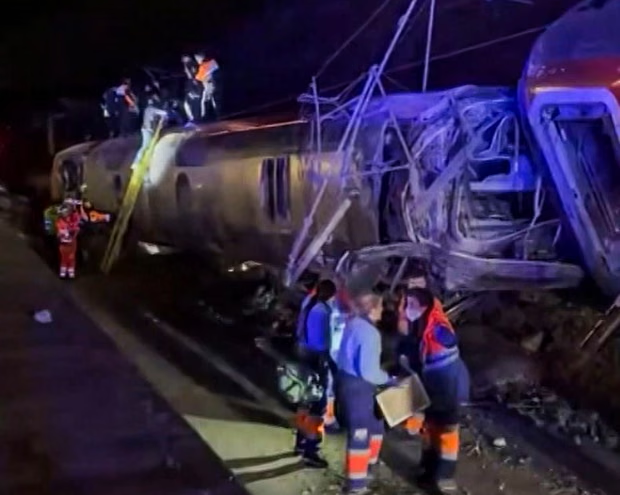
Another witness reported to public broadcaster RTVE that one of the Iryo train carriages had completely overturned, describing a scene of chaos and destruction.
A passenger aboard the Renfe train—traveling from Madrid to Huelva—told TVE:
“There were people screaming, their bags fell from the shelves. I was traveling in the fourth carriage— the last, luckily.”
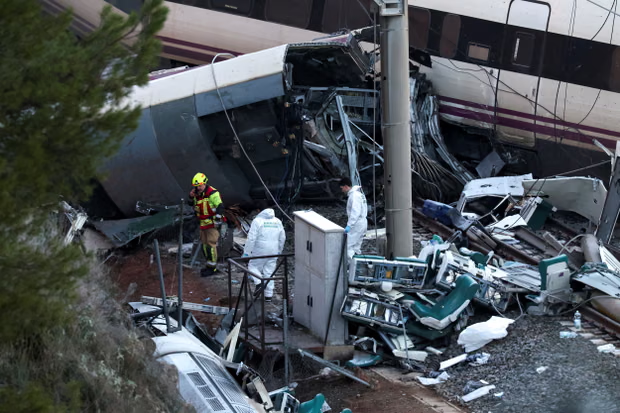
Television footage showed emergency crews, ambulances, and fire services at the scene. The wreckage of twisted metal and broken seats was visible across the landscape, illustrating the magnitude of the crash.
Emergency Response: A Race Against Time
The rescue operation was described by Córdoba fire chief Paco Carmona as both urgent and complicated. He noted that while the Iryo train had been evacuated within hours, the Renfe carriages were severely damaged and trapped passengers remained inside.
Carmona told TVE:
“There are still people trapped. The operation is concentrating on getting people out of areas which are very narrow. We have to remove the bodies to reach anyone who is still alive. It is proving to be a complicated task.”
He emphasized the difficulty of reaching victims in the wreckage due to the confined and unstable spaces inside the twisted carriages.
The emergency response required coordination among multiple agencies, including:
- Guardia Civil (Spain’s national police)
- Local fire departments
- Medical services
- Rail infrastructure teams
- Crisis management teams from both Iryo and Renfe
Technical Questions: What Caused the Derailment?
Spain’s transport minister, Óscar Puente, confirmed that the cause of the accident had not yet been established. However, he expressed surprise that a derailment could occur on a straight section of track, noting that this stretch had been renewed as recently as May.
Puente added that the majority of fatalities and injuries appeared to have occurred in the first two carriages of the Renfe train, indicating that the impact zone was concentrated at the front of the train.
This has raised serious concerns about:
- Track integrity
- Train speed
- Safety protocols
- Signaling systems
- Human error or mechanical failure
Investigations will likely examine the following:
- Signal malfunction
- Train speed at impact
- Track switching errors
- Communication failures between trains and control centers
- Possible structural weaknesses or recent maintenance errors
The fact that the track had recently been renewed has intensified public scrutiny and raised serious questions about construction quality, regulatory oversight, and maintenance standards.
National Reaction: Grief and Political Shock
Prime Minister Pedro Sánchez announced that he would visit the site of the accident on Monday. He expressed his condolences to the families and loved ones of the victims in a message on X (formerly Twitter):
“Tonight is a night of deep pain for our country due to the tragic railway accident in Adamuz… No words can alleviate such immense suffering, but I want them to know that the entire country stands with them in this extremely difficult moment.”
Spain’s King and Queen were also closely monitoring the situation, with a spokesperson confirming that they were following developments “with concern.”
The regional president of Andalusia, Juan Manuel Moreno, offered condolences and said:
“Our hearts are broken.”
Survivor Accounts: The Reality of the Crash
The intensity of the collision was described by a journalist from public broadcaster RNE, who said the impact felt like an earthquake. Passengers reportedly used emergency hammers to break carriage windows and escape.
Another passenger, named Carmen, posted on X describing the moment of derailment:
“Ten minutes after departing [from Córdoba], the train started to shake a lot, and it derailed from coach six behind us. The lights went out.”
Another passenger posted footage showing an Iryo official instructing passengers to stay seated until evacuation was safe. The official advised passengers to conserve their phone batteries so they could use their phone torches later.
“In our carriage we’re well but we don’t know about the other carriages. There’s smoke and they’re calling for a doctor.”
The passenger added that the emergency response team was making efforts to evacuate passengers safely despite darkness and confusion.
Local Community Impact: A Small Town Under Pressure
Adamuz is a town of just 5,000 residents. Local television footage showed a reception center set up to care for passengers. Residents brought food, blankets, and clothing as night-time temperatures dropped to around 6°C (42°F).
This small community was suddenly thrust into the national spotlight, and local volunteers became part of the emergency response effort.
The social impact is profound:
- A small town coping with mass casualties
- Local volunteers assisting in crisis response
- Emotional trauma for residents and passengers alike
Rail Operations Halted: Major Disruption in Spain
Following the crash, Adif suspended all rail services between Madrid and Andalusia. This is a major disruption affecting thousands of passengers, businesses, and the economy.
Rail operators have been forced to reroute traffic, cancel services, and coordinate alternative transportation for affected passengers.
The closure will likely continue for days or even weeks, depending on:
- The extent of track damage
- Recovery and cleanup operations
- Investigation timelines
- Structural repairs required
Spain’s Worst Rail Accident Since 2013
This incident is Spain’s deadliest rail crash in the 21st century. The last comparable tragedy occurred in July 2013, when a train traveling at 111 mph (179 km/h) derailed in Galicia due to speeding on a curve with a 50 mph limit. That crash killed 80 people.
The 2013 accident resulted in:
- National outrage
- Questions about rail safety systems
- Policy reforms
- Changes in train speed regulations
Sunday’s crash will now likely reopen scrutiny of Spain’s rail infrastructure, safety protocols, and regulatory oversight.
Why This Crash Matters: Beyond the Numbers
The tragedy in Adamuz is not only a national disaster but also a global warning about the fragility of modern rail systems. It underscores the need for:Modernized Safety Systems
While Spain has some of the most advanced rail infrastructure in Europe, this crash reveals that even advanced systems can fail without proper maintenance, monitoring, and safety checks.
Stronger Emergency Preparedness
The complexity of the rescue operation shows that emergency systems must be able to respond to mass casualty events quickly and efficiently.
Accountability and Transparency
The public demands answers. Investigations must be transparent, and authorities must communicate clearly and quickly.
Structural Oversight
If track renewal occurred only months ago, questions arise about construction quality and regulatory inspections.
The Investigation: What Authorities Will Examine
Investigators will examine:
- Train data recorders (black boxes)
- Signal system logs
- Track and rail integrity
- Maintenance records
- Operator training and procedures
- Weather and environmental conditions
- Emergency response timelines
The outcome could have wide-reaching consequences, including:
- Legal action
- Government inquiries
- Policy reforms
- Safety regulation changes
- Industry-wide operational changes
The Wider Implications for Spain’s Rail Industry
Spain has invested heavily in high-speed rail (AVE) and is known for its efficient rail network. However, this accident may:
- Damage public trust in rail travel
- Affect future investment in rail infrastructure
- Prompt regulatory reforms
- Cause increased scrutiny of private rail operators such as Iryo
It may also influence political debates about:
- National infrastructure safety
- Privatization vs. public control
- Rail modernization funding
- Long-term investment priorities
The Path Forward: A Nation in Mourning
As Spain mourns its dead and cares for the injured, the country faces a long road toward recovery and accountability. Families of victims will demand answers, and the nation will likely call for:
- A thorough investigation
- Transparency from authorities
- Policy reforms
- Improved safety measures
Prime Minister Sánchez’s promise to visit the scene underscores the seriousness of the crisis and the government’s commitment to addressing it.
Read More: Trump’s Tariff Threats Weigh on European Auto and Credit Sectors
FAQ’s
What happened in the southern Spain train crash?
Two trains collided near Adamuz in Córdoba province on Sunday night. A high-speed Iryo train from Málaga to Madrid derailed and crossed onto the opposite track, hitting an oncoming Renfe train. Both trains derailed, causing significant casualties.
How many people were killed or injured?
At least 39 people were killed, and 12 were in intensive care. Emergency services reported 122 people treated for injuries, with 48 still hospitalized.
What caused the crash?
The cause is still under investigation. Spain’s transport minister described it as “strange” because the derailment happened on a straight track section that was recently renewed. Officials are examining track conditions, signaling systems, and train speed.
What is the status of rail services in the area?
Adif suspended all rail services between Madrid and Andalucía following the crash. Rail traffic remains halted while emergency and investigation teams work at the site.
Who is responding to the accident?
Emergency response includes the Guardia Civil, local fire departments, medical teams, Iryo, Renfe, and Adif. The Spanish government has also mobilized resources, and Prime Minister Pedro Sánchez has expressed condolences and is expected to visit the site.
Conclusion
The collision of two trains near Adamuz in southern Spain is a devastating tragedy that has claimed at least 39 lives and left many more injured. As emergency teams continue their search, rescue, and recovery efforts, the nation is confronting a moment of profound grief and uncertainty. While the exact cause remains under investigation, the scale of the accident underscores the critical importance of rail safety, infrastructure integrity, and rapid emergency response. The incident has prompted immediate action from authorities, including suspension of services, and has drawn national attention from Spain’s leaders. As families and communities mourn, the focus now shifts to understanding what went wrong, ensuring accountability, and preventing such a catastrophe from happening again.