
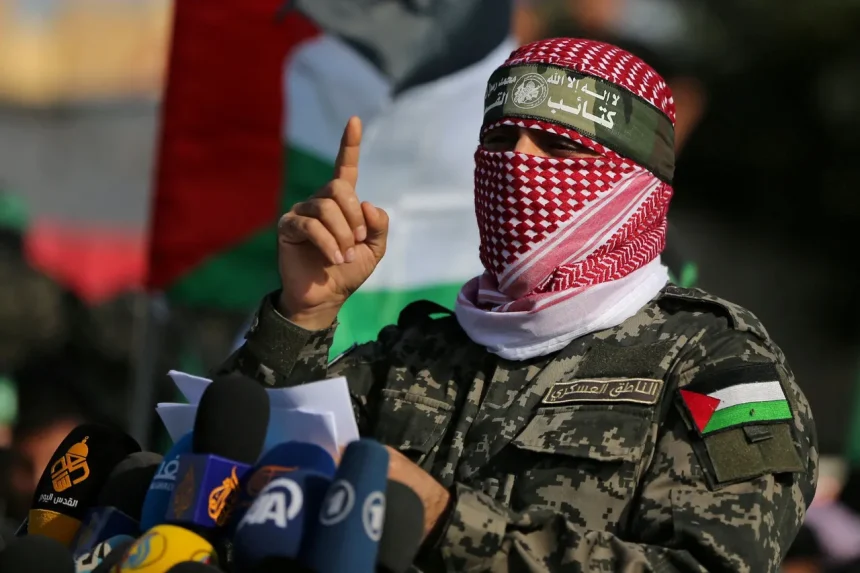
The Palestinian militant group Hamas has confirmed the deaths of Abu Ubaida, its prominent wartime spokesperson, along with several senior military commanders amid Israel’s two-year war on Gaza.
In a recorded statement on Monday, Hamas’ armed wing, the Qassam Brigades, identified Abu Ubaida — born Hudhayfah Abdullah al-Kahlout — as having been killed during the conflict.
Rarely seen in public and often masked, Abu Ubaida was the most recognisable voice of Hamas throughout the war, delivering updates and messages that drew international attention.
Hamas also confirmed the death of its chief of staff, Mohammed Sinwar, who had led the Qassam Brigades through what the group described as an “exceptionally challenging period,” succeeding longtime commander Mohammed Deif. Mohammed Sinwar was the brother of Yahya Sinwar, Hamas’ political chief in Gaza.
Other senior commanders killed
Among the other casualties was Mohammed Shabana, commander of the Rafah Brigade, who reportedly died alongside Yahya Sinwar.
The group additionally announced the deaths of Hakam al-Issa, a senior figure responsible for training, military education, and strategic planning, and Raed Saad, head of Hamas’ weapons manufacturing division and a former operations chief.
Hamas described these losses as evidence of the high cost its leadership has paid during the conflict, emphasizing that the deaths would not weaken the group’s resistance.
FAQs
Who was Abu Ubaida?
Abu Ubaida, born Hudhayfah Abdullah al-Kahlout, was Hamas’ iconic wartime spokesperson. He was the group’s most recognisable voice during the Israel-Gaza conflict, often delivering updates and statements while rarely appearing in public.
Who were the other Hamas commanders killed?
Other senior leaders confirmed dead include Mohammed Sinwar (chief of staff of the Qassam Brigades), Mohammed Shabana (commander of the Rafah Brigade), Hakam al-Issa (strategic planning and training), and Raed Saad (weapons manufacturing and former operations chief).
What role did Mohammed Sinwar play in Hamas?
Mohammed Sinwar led the Qassam Brigades after succeeding longtime commander Mohammed Deif. He guided the armed wing through an “exceptionally challenging period” and was the brother of Yahya Sinwar, Hamas’ political chief in Gaza.
How did Hamas respond to these losses?
Hamas described the deaths as evidence of the heavy price paid by its leadership but emphasized that the losses would not weaken its resistance against Israel.
Why were these leaders targeted?
These senior Hamas figures were killed in Israeli strikes, which targeted key commanders as part of ongoing military operations in the Israel-Gaza conflict.
Conclusion
The deaths of Abu Ubaida and other senior Hamas commanders mark a significant moment in the ongoing Israel-Gaza conflict. While these losses highlight the heavy toll on the group’s leadership, Hamas has reaffirmed its commitment to continue its operations. The announcement underscores both the intensity of the conflict and the strategic importance of these leaders within the organization. Despite the setback, Hamas insists that its resistance remains undiminished.