

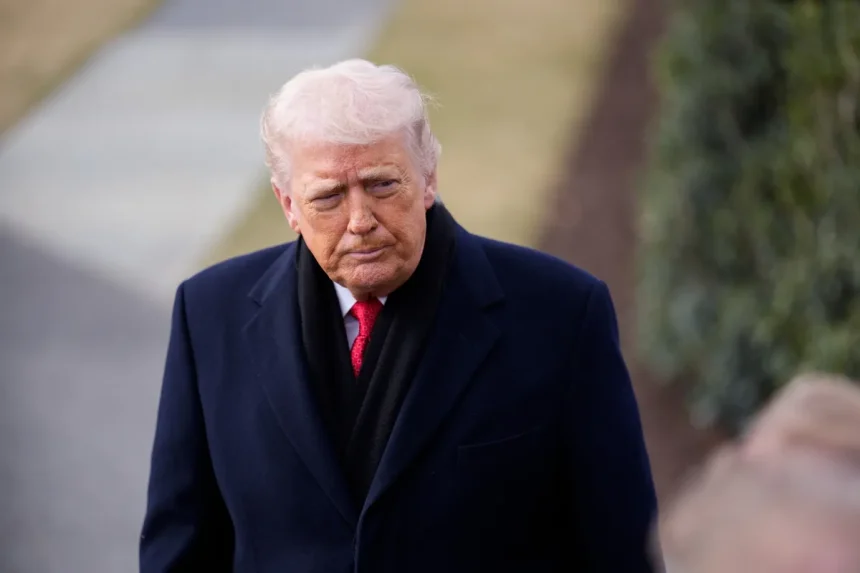
European equity markets suffered a sharp decline after former President Donald Trump renewed trade war threats against Europe. The sudden escalation of geopolitical tension came amid already-fragile market sentiment, driven by high valuations and fading global growth expectations. The Stoxx Europe 600 Index dropped 1.2% in early trading, reflecting broad-based risk aversion. Sectors with high exposure to US demand—such as automakers and luxury goods companies—experienced the most severe losses, while defense stocks surged as investors sought safe havens amid uncertainty.
- A Sudden Market Reversal: Europe’s Rally Loses Momentum
- Credit Markets React: Risk Premiums Rise
- What Triggered the Tariff Threat? The Greenland Dispute
- European Response: Retaliation Looms
- Sector Impact: Winners and Losers
- Analyst Warnings: Earnings Growth at Risk
- Economic Impact: GDP and Confidence Effects
- Valuations and Market Risk: Europe Was Already Overheated
- Currency and Bond Markets: Safe-Haven Flows
- Euro Outlook: Limited Impact or Deeper Weakness?
- Will the Conflict Escalate? Market Opinions Vary
- The Supreme Court Factor: Legal Limits on Tariffs
- Long-Term Implications: A Shift in Global Trade Dynamics
- FAQ’s
- Conclusion
The move in European equities was matched by a rise in credit risk indicators, suggesting that investors are pricing in the potential for a wider economic shock. Credit default swap (CDS) spreads widened significantly, especially among lower-rated issuers. This indicates that traders are increasingly concerned about the possibility of slower growth, higher borrowing costs, and disrupted trade flows. While the US cash market remained closed for a public holiday, US equity futures were lower, signaling that the sell-off could continue once markets reopen.
Trump’s tariff threat marks a dramatic escalation in tensions over Greenland, following a dispute over potential US acquisition of the territory. On Saturday, Trump announced a 10% tariff on goods from European countries that supported Greenland against US ambitions, effective Feb. 1. He further warned that tariffs would rise to 25% in June unless “a Deal is reached for the Complete and Total purchase of Greenland.” The rhetoric triggered immediate backlash from European leaders and revived concerns about a renewed era of protectionism.
A Sudden Market Reversal: Europe’s Rally Loses Momentum
The European equity rally had been strong in recent months, driven by optimism about economic recovery, improved corporate earnings, and a shift toward value sectors. However, the sudden tariff threat exposed the fragility of investor confidence. Many investors were already wary of stretched valuations and rising geopolitical risks. As a result, the announcement acted as a trigger for profit-taking and risk-off positioning.
Vincent Juvyns, chief investment strategist at ING in Brussels, described the move as a potential catalyst for market retracement. While the direct economic impact of a 10% tariff might be manageable in isolation, the risk lies in the broader geopolitical implications. A deterioration of relations between the US and its closest allies could undermine investor confidence, disrupt supply chains, and raise the probability of retaliatory measures. In that scenario, the economic consequences could extend far beyond the direct cost of tariffs.
Credit Markets React: Risk Premiums Rise

The reaction was not limited to equity markets. Credit risk gauges rose sharply, with the iTraxx Crossover index—covering junk-rated corporate debt—jumping by as much as 8.5 basis points. The iTraxx Europe index, representing investment-grade credit, also widened by 1.8 basis points. These moves indicate that investors are increasingly demanding higher compensation for credit risk, reflecting expectations of higher volatility, weaker growth, and potential disruptions to corporate earnings.
This rise in credit spreads is significant for several reasons:
- Funding Costs Increase: Higher credit spreads translate into higher borrowing costs for corporations. This can pressure margins, delay investment, and reduce share buybacks.
- Debt Markets Slow: With higher risk premiums, corporate bond issuance could slow down, especially for lower-rated firms.
- Financial Stability Concerns: If spreads continue to widen, it could strain the most leveraged sectors and companies, potentially triggering broader market stress.
Given that the US market was closed, the initial move in European credit markets may be amplified once US trading resumes, as investors reassess risk across global markets.
What Triggered the Tariff Threat? The Greenland Dispute
The immediate catalyst for the tariff announcement was a dispute over Greenland, which had sparked diplomatic tensions between the US and European allies. Trump’s proposal to purchase Greenland had been met with resistance from European governments, leading to a sharp diplomatic rift.
Trump’s tariff announcement targeted eight European countries that supported Greenland against US interests. By linking tariffs to geopolitical leverage, Trump signaled a willingness to use economic pressure to pursue strategic goals. The 10% tariff starting Feb. 1, rising to 25% in June if no deal is reached, represents a significant escalation and raises the prospect of a broader trade conflict.
This approach is consistent with Trump’s past strategy of using tariffs as a negotiating tool. However, the risk is that such tactics can backfire by escalating tensions and triggering retaliatory measures, particularly from the European Union, which has already indicated it is preparing a response.
European Response: Retaliation Looms

European leaders quickly condemned Trump’s tariff threats. The European Union reportedly entered discussions on possible retaliatory tariffs on $108 billion worth of US goods. This is a significant escalation, as it would target key US export sectors and potentially widen the trade conflict.
The EU’s most immediate response was to halt approval of its planned trade deal with the United States. This move underscores the seriousness of the dispute and signals that Europe is willing to push back, even if it means delaying or abandoning long-term trade negotiations.
If the EU imposes retaliatory tariffs, the consequences could be severe:
- Trade volumes would decline due to higher costs and disrupted supply chains.
- Consumer prices could rise, as companies pass on tariff costs.
- Corporate earnings could fall, particularly in sectors reliant on transatlantic trade.
- Global growth could weaken, as trade tensions spread to other regions.
Sector Impact: Winners and Losers
The initial market reaction was consistent with the expected winners and losers in a tariff conflict.
Losers
Luxury goods and automakers were among the biggest losers, reflecting their high exposure to the US market.
- LVMH fell more than 4%, its largest drop since April. The luxury sector is particularly vulnerable to US demand and consumer sentiment.
- Volkswagen and Mercedes-Benz both dropped more than 3%, reflecting the risk of reduced demand and higher production costs if tariffs escalate.
Winners
The defense sector rallied, as geopolitical uncertainty tends to increase demand for defense spending and risk-hedging investment strategies.
- Rheinmetall rose more than 2%, benefiting from increased risk-off sentiment and expectations of higher defense budgets.
Analyst Warnings: Earnings Growth at Risk
Analysts at Bloomberg Intelligence warned that a trade escalation could erase much of Europe’s earnings growth projected for 2026. They estimated a potential mid-single-digit correction in European equities if the trade war intensifies.
The risk is not limited to tariffs alone. Market participants worry about broader confidence effects. A breakdown in relations between the US and Europe could undermine business confidence, reduce investment, and increase political uncertainty. This could lead to slower growth across the region.
Economic Impact: GDP and Confidence Effects
Goldman Sachs economists estimated that a 10% tariff could reduce real GDP by 0.1% to 0.2% across affected countries, with Germany bearing the largest impact due to its export dependence. The economists warned that the effect could be larger if confidence and financial market effects are included.
This is a crucial point: tariffs not only increase costs directly but also affect expectations. If businesses expect prolonged trade conflict, they may delay investments, reduce hiring, and shift supply chains, causing a broader economic slowdown.
Valuations and Market Risk: Europe Was Already Overheated
The tariff threat arrived at a time when European markets were already richly valued. Since the start of 2025, the Stoxx Europe 600 had risen 36% in dollar terms, double the S&P 500’s gains. The index was trading at nearly 16 times forward earnings, above its 15-year average, and narrowing its discount to US peers to roughly 30%.
This level of valuation suggests that the market had priced in strong growth and minimal geopolitical risk. The tariff threat challenged that assumption, forcing investors to reassess whether European equities could continue to outperform.
Alexandre Baradez, chief market analyst at IG in Paris, warned that multiple issues were piling up—credit risk, Fed independence concerns, and tariffs—making it difficult for markets to sustain record-breaking rallies.
Currency and Bond Markets: Safe-Haven Flows
The dollar declined against most Group-of-10 currencies as investors moved toward safe havens. The Swiss franc strengthened, reflecting its traditional role as a refuge during geopolitical turmoil.
In the bond market, short-dated government bonds led gains. Germany’s two-year yield fell four basis points to 2.08%, indicating a flight to safety. US Treasury futures were steady, suggesting that markets expected little change in yields once the US cash market reopened.
Euro Outlook: Limited Impact or Deeper Weakness?
Deutsche Bank predicted a limited impact on the euro, arguing that the US depends heavily on Europe for capital. The bank also noted that the tariffs could strengthen EU political cohesion, reducing the likelihood of sustained negative impact on the currency.
However, Deutsche Bank’s George Saravelos emphasized that the key issue would be whether the EU activates its “anti-coercion instrument,” potentially targeting capital markets. If Europe responds with measures that affect financial flows, the euro could face greater downward pressure.
Will the Conflict Escalate? Market Opinions Vary
Many market participants expressed confidence that a full-blown trade war would be avoided, citing the historical pattern of Trump “chickening out” after making threats. Some even described the event as a likely “TACO moment,” where the threat is eventually reversed or diluted.
Bullish Views
- David Kruk, head of trading at La Financiere de l’Echiquier, said he would maintain a bullish stance, expecting the threat to be resolved without major escalation.
- Michael Brown, senior research strategist at Pepperstone, viewed equity dips as buying opportunities, assuming retaliation remains mostly rhetorical.
Cautious Views
- Francisco Simón, European head of strategy at Santander Asset Management, emphasized that the key factor would be whether the threat translates into real measures or remains political noise. He warned that even if the probability of implementation is low, the announcement increases risk premiums.
- Andrea Tueni, head of sales trading at Saxo Banque France, expected a negative impact on luxury goods, wine, and spirits, especially due to reduced US demand.
Strategic Autonomy
- Vincent Mortier, CIO at Amundi, noted that the tariff threat could be a long-term catalyst for Europe to accelerate its strategic autonomy agenda and form new alliances. He suggested that while short-term disruption is likely, Europe may ultimately become more self-reliant and resilient.
Limited Escalation View
- Christopher Dembik, senior investment adviser at Pictet Asset Management, argued that Europe does not have the means to wage a full trade war against the US, implying limited escalation. He viewed the move as a short-term spike in volatility amplified by thin liquidity.
The Supreme Court Factor: Legal Limits on Tariffs
Krishna Guha, head of central bank strategy at Evercore ISI, noted that the US Supreme Court’s upcoming ruling could limit Trump’s ability to impose tariffs in this manner. If the Court restricts presidential authority on tariffs, the threat may lack legal backing, reducing the likelihood of implementation.
This adds another layer of uncertainty. Investors must weigh not only the economic impact of tariffs but also the legal and political feasibility of enforcement.
Long-Term Implications: A Shift in Global Trade Dynamics
Even if the tariff threat is not implemented, the announcement may have lasting consequences. The incident underscores the fragility of the current global trade framework and the risk of political decisions overriding economic logic.
Potential Long-Term Effects
- Supply Chain Reconfiguration: Companies may accelerate efforts to diversify supply chains away from the US and Europe to reduce political risk.
- Regionalization: Trade may become more regional, with countries strengthening local partnerships and reducing reliance on global trade networks.
- Strategic Autonomy: Europe may intensify efforts to reduce dependence on the US, particularly in defense, energy, and technology.
- Investment Shifts: Investors may demand higher risk premiums for politically sensitive sectors, including luxury goods, automakers, and high-trade-exposure industries.
Read More: Trump Says Iran Has Halted Killings as Global Tensions Ease Slightly
FAQ’s
Why did European shares fall sharply?
European shares dropped because Donald Trump threatened new tariffs on European countries over the Greenland dispute, increasing geopolitical uncertainty and sparking profit-taking among investors.
Which European sectors were most affected by the tariff threat?
Automakers and luxury goods companies experienced the biggest losses due to their strong exposure to the US market. Meanwhile, the defense sector gained as investors shifted toward safe-haven assets.
What happened to credit risk indicators in Europe?
Credit risk gauges, including the iTraxx Crossover index, rose sharply. This indicates higher perceived risk in the corporate debt market, potentially leading to increased borrowing costs and reduced bond issuance.
How did the EU respond to Trump’s tariff announcement?
The EU reacted quickly, stating it could impose retaliatory tariffs on $108 billion worth of US goods and halting approval of a planned trade deal with the US.
What are the potential economic impacts of these tariffs?
Economists estimate a 10% tariff could reduce real GDP by 0.1% to 0.2% across affected countries. If the conflict escalates, the impact could be larger due to weakened confidence, disrupted trade, and higher costs for businesses and consumers.
Conclusion
The tariff threat has introduced a new level of uncertainty into European markets at a time when valuations were already high. The initial market reaction—equities down, credit spreads up, safe-haven currencies rising—reflects the risk of broader geopolitical disruption. While some analysts believe the threat will remain rhetorical, the episode highlights how quickly trade tensions can re-emerge and disrupt investor confidence.
Europe’s economic recovery may now face additional headwinds, and the market must reassess the risk of a renewed trade war. Whether the conflict escalates or fades, the event will likely leave a lasting mark on investor sentiment, trade policy expectations, and the long-term trajectory of global markets.