

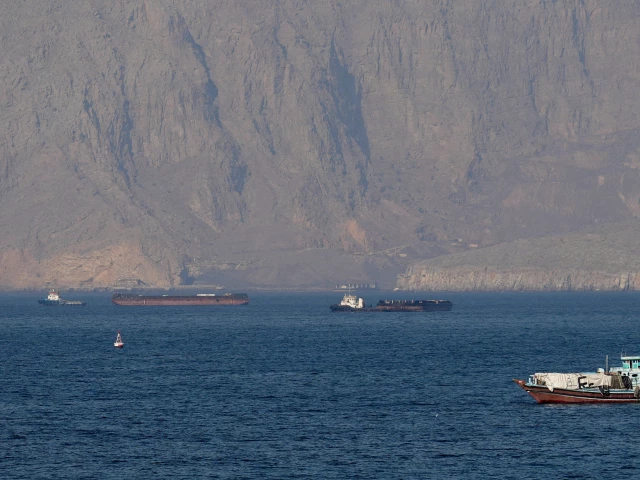
Tehran says any move in the strategic waterway must be coordinated with Iran, as maritime tensions rise near Oman
Iran has warned against any unilateral action in the Strait of Hormuz following reports that commercial tankers were struck near the Omani coast, raising fresh concerns over security in one of the world’s most important energy shipping routes.
Alaeddin Boroujerdi, a member of Iran’s Parliament National Security and Foreign Policy Committee, said Tuesday that “any action in the Strait of Hormuz without coordination with Iran is doomed to failure,” according to Iranian state media cited by Al Jazeera.
Boroujerdi said Tehran’s position on the waterway had been decided “at the highest levels” of the Iranian system and was shaped by the recent US-Israel conflict with Iran. He added that parliament would soon approve legislation on the management of the Strait of Hormuz, requiring relevant Iranian bodies to fully implement its provisions.
Read More: Oil prices rise and stock futures fall as tensions with Iran fuel market uncertainty.
The warning came after the United Kingdom Maritime Trade Operations agency said a tanker was hit by an unknown projectile about eight nautical miles east of Limah, Oman. The strike caused a fire on the vessel’s port side while it was traveling southbound, though no casualties or environmental damage were reported. Authorities are investigating, and ships in the area have been advised to proceed with caution. Reuters
Separately, Axios reported that Iran’s Islamic Revolutionary Guard Corps fired at least two missiles at commercial ships transiting the Strait of Hormuz, citing US officials. The report said two vessels suffered significant damage, though no deaths were reported. Axios
Iranian state broadcaster IRIB claimed that a Qatari oil tanker was targeted after ignoring repeated warnings while attempting to pass through the Omani route with US Navy support. Tehran has framed its actions in the strait as part of its national security policy.
The Strait of Hormuz is a narrow but vital passage between Iran and Oman, linking the Gulf to the Arabian Sea. A major share of the world’s oil and liquefied natural gas exports moves through the route, making any disruption a serious concern for global energy markets.
Iranian FM Says US Threats Block Final Deal Talks
The maritime escalation also comes amid renewed strain between Tehran and Washington.
Iranian Foreign Minister Abbas Araghchi said Tuesday that negotiations on a final deal with the United States would not begin while Washington continues to issue threats.
“Para 13 of the MoU is clear: negotiations on final deal will not commence if threats continue. Honor your signature,” Araghchi wrote on X.
His remarks followed US President Donald Trump’s warning that Washington would “finish the job” if no agreement was reached with Iran. Araghchi was referring to an interim memorandum signed last month, under which both sides reportedly agreed to avoid threats or the use of force while diplomacy continued.
The latest incidents near Hormuz risk further complicating those talks, already under pressure from military warnings, tanker attacks and competing claims over who controls maritime movement through the strait.
Conclusion
The latest warnings from Tehran and reports of attacks near Oman have added fresh pressure to an already fragile diplomatic process between Iran and the United States. With the Strait of Hormuz remaining central to global energy security, any further escalation could threaten shipping, unsettle markets and deepen regional tensions at a critical moment for negotiations.