

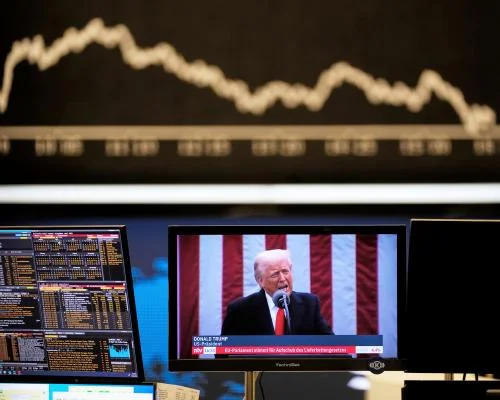
The U.S. economy in 2025 delivered a puzzling mix of signals. Economic growth remained solid, yet hiring slowed noticeably, inflation stayed stubbornly high, and unemployment climbed to its highest level in four years. Together, these contradictions have left economists, policymakers, and businesses struggling to determine whether the economy is gaining strength or quietly losing momentum.
Last year’s unusual outcomes are now shaping the outlook for 2026. A central question looms: will steady growth eventually revive the labor market, or does weak hiring signal deeper problems ahead?
Some economists warn of another possibility — that the economy could continue expanding without generating many new jobs, as businesses increasingly rely on technology, especially artificial intelligence, to boost productivity without adding workers. Such a scenario, often described as a “jobless expansion,” could fundamentally reshape the labor market.
Complicating matters further, a six-week federal government shutdown last fall disrupted the collection and release of key economic data, leaving Federal Reserve officials with an incomplete picture of how 2025 truly ended.
“2026 begins at a time when it is hard to say how 2025 ended,” said Stephen Stanley, chief economist at Santander, in a note to clients.
Growth Picked Up After a Rocky Start
Despite widespread pessimism among consumers, Americans continued spending at a healthy pace in 2025. Strong consumer demand largely driven by higher-income households helped push economic growth to a 4.3% annual rate in the July–September quarter, the fastest pace in two years and well above expectations.
This rebound followed a turbulent first half of the year, when President Donald Trump’s tariff policies distorted economic activity. Businesses rushed to import goods ahead of expected duties, causing a temporary surge in imports that dragged down growth in early 2025.
Growth likely continued in the final months of the year, though economists estimate the government shutdown shaved about one percentage point off overall output.
Hiring Lagged and Unemployment Rose
While growth improved, the labor market told a different story.
Hiring weakened notably after Trump announced sweeping tariffs in early April an event he labeled Liberation Day. The economy lost jobs in June, August, and October, an unusual pattern during a period of economic expansion.
Meanwhile, the unemployment rate rose from 4% in January to 4.6% in November, its highest level in four years. December employment figures are expected in early January.
Economists cite several reasons for the slowdown:
- Ongoing uncertainty around tariffs, which were announced, delayed, revised, or rolled back multiple times
- Employers taking a “wait and see” approach to hiring
- Rapid adoption of artificial intelligence, prompting firms to reassess staffing needs
Despite slower hiring, layoffs remained relatively low, resulting in what analysts describe as a “low-hire, low-fire” labor market.
Federal Reserve Governor Christopher Waller noted that conversations with business leaders increasingly revolve around AI. “AI, AI, AI — that is all I have heard since this summer,” he said, explaining why many companies have paused hiring.
There were modest signs of improvement late in the year. While employers cut 105,000 jobs in October, much of that decline reflected a sharp drop in federal employment following the Trump administration’s government workforce reductions. Excluding government jobs, businesses added an average of 75,000 jobs per month in the three months ending in November — a meaningful rebound from the summer.
Still, job growth remained heavily concentrated in a few sectors, including health care, hospitality, and government. Most major private industries either stagnated or shed jobs.
Inflation Refused to Cool
Inflation remained another persistent challenge.
Although price growth eased significantly in 2023 and 2024 from a four-decade high, progress largely stalled in 2025. According to the Federal Reserve’s preferred inflation measure, prices rose 2.8% annually in September, slightly higher than the 2.7% rate recorded at the end of 2024.
Rising living costs became a powerful political issue in elections across the country, including gubernatorial races and New York City’s mayoral contest. While Democrats largely prevailed, inflation concerns continued to dominate voter sentiment. Trump repeatedly dismissed affordability concerns as a “hoax.”
Inflation appeared to cool in November based on the consumer price index, though economists caution that the data was distorted by the government shutdown and seasonal holiday discounts.
Looking ahead, some analysts worry inflation could edge higher in early 2026 as companies adjust prices and pass along higher tariff-related costs. Most, however, expect inflation to gradually decline toward the Fed’s 2% target over the year.
Cautious Optimism for 2026
Despite lingering uncertainties, many economists remain cautiously optimistic. Stanley expects hiring to improve as growth strengthens, aided by large tax refunds early in the year stemming from Trump’s tax cut legislation. Reduced tariff uncertainty may also encourage businesses to expand payrolls.
This year could turn out to be a better year, Waller said recently. Now whether that pulls the labor market along with it, I certainly hope it does.
Read more: How AI is Transforming the Diagnosis and Treatment of Vision Loss
FAQs
Why did the economy grow while hiring slowed?
Growth was largely driven by strong consumer spending, particularly among wealthier households, while businesses hesitated to hire due to tariffs, uncertainty, and increased use of AI.
What is a “jobless expansion”?
It refers to a period when the economy grows but job creation remains weak, often due to productivity gains or automation.
How did the government shutdown affect economic data?
The shutdown delayed and disrupted data collection, making it harder for policymakers to accurately assess economic conditions.
Why is inflation still high?
Price pressures persisted due to tariffs, supply adjustments, and steady consumer demand, even as earlier inflation spikes eased.
Is the labor market improving?
There are early signs of improvement, particularly in private-sector hiring, but gains remain uneven and concentrated in specific industries.
Conclusion
The U.S. economy in 2025 defied easy explanation. Strong growth coexisted with weak hiring, rising unemployment, and stubborn inflation, creating an uneven and uncertain economic landscape. While consumer spending and productivity gains kept the expansion alive, many workers and lower-income households felt left behind in what economists describe as a “K-shaped” economy.