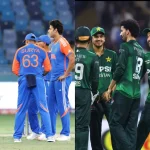


Well, everything about this game is big picture. If we needed a reminder of how much in cricket is sustained by this fixture, it came over the past two weeks, when it dangled over the precipice of not happening at all. The result of an India-Pakistan T20 World Cup match might feel like it means everything, but, as the ICC has said for at least the last decade and a half, it doesn’t have to mean anything at all. It just needs to happen.
A rivalry with history
Nearly 30 years ago, India and Pakistan united to field a combined team in support of Sri Lanka ahead of the 1996 Cricket World Cup — a rare show of solidarity between the fierce rivals. Decades later, the fixture remains the most heavily marketed encounter at any multinational tournament, whether it is the World Cup, Asia Cup or Asian Games.
Few sporting contests command the same global attention as an India-Pakistan cricket match. So when Pakistan’s government initially instructed its team not to play India at the ongoing T20 World Cup, the tournament was thrown into uncertainty — and Sri Lanka, the designated host, faced the prospect of significant losses.
Following intense negotiations, the boycott was withdrawn and the match will now go ahead as scheduled at the R. Premadasa International Cricket Stadium in Colombo.
Had the standoff continued, the consequences could have been severe not only for Pakistan but also for the International Cricket Council (ICC) and Sri Lanka.
With the crisis resolved, the island nation now stands to benefit economically, diplomatically and socially.
Tourism lifeline for a recovering economy
Still recovering from its 2022 financial crisis, Sri Lanka views the India-Pakistan encounter as a timely opportunity.
The tourism and hospitality sectors — among the hardest hit during the economic downturn — are witnessing a surge in demand. Hotels in Colombo that saw cancellations after the boycott announcement have since reported dramatic price increases following Pakistan’s reversal, with luxury room rates climbing sharply.
Beyond hotels, restaurants, transport operators and small vendors are expecting a spike in business as thousands of supporters from India and Pakistan travel for the game. Short-term visits could also translate into longer stays or future holidays, offering lasting benefits for the tourism industry.
The match has also generated temporary employment opportunities across media, broadcasting, security, transport and event management — a welcome boost for local workers.
Diplomatic undertones
In South Asia, sport and politics are often intertwined. Pakistan’s initial boycott was framed as political solidarity with Bangladesh after their expulsion from the tournament. The decision to reverse course was equally political, reportedly following diplomatic engagement within the region.
Sri Lanka’s leadership is understood to have encouraged reconsideration, recognising that successfully hosting the match would reinforce the country’s reputation as a neutral venue capable of staging high-profile global events.
Sri Lanka and Pakistan share longstanding diplomatic and cricketing ties. Notably, Sri Lanka was among the first nations to tour Pakistan after the 2009 attack on the visiting Sri Lankan team led to a decade-long suspension of international cricket there.
Officials from Sri Lanka Cricket confirmed they had urged their Pakistani counterparts to rethink the boycott, citing potential economic repercussions and the strong relationship between the two boards.
Anticipation builds in Colombo
With just hours to go before the first ball, Colombo is buzzing with excitement. Ticket sales have surged, with organisers expecting a near-capacity crowd at the 40,000-seat venue.
Streets around Maligawatte — home to the Premadasa Stadium — are preparing for an influx of fans eager to witness one of cricket’s most intense rivalries.
From looming uncertainty to renewed optimism, Sri Lanka now stands ready to host a fixture that promises not only sporting drama but also significant rewards beyond the boundary ropes.
Read more: India vs Pakistan: T20 World Cup – teams, start time, lineups
Conclusion
As Colombo readies itself for one of cricket’s most electrifying rivalries, the India-Pakistan clash represents far more than a group-stage fixture. What once threatened to become a financial and diplomatic setback has transformed into a major opportunity for Sri Lanka — boosting tourism, strengthening regional ties and showcasing its ability to host high-stakes global events. When the first ball is bowled, the spotlight will be on the players, but the wider impact of this encounter will be felt well beyond the stadium.