

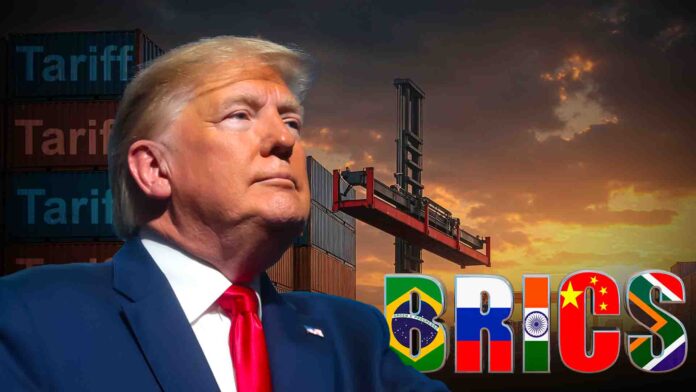
Global markets are once again confronting the familiar specter of trade conflict as U.S. President Donald Trump escalates rhetoric against Canada over its recent trade engagement with China. In a dramatic warning, Trump threatened to impose a sweeping 100% tariff on all Canadian exports to the United States, a move that could significantly disrupt North American supply chains and reshape global trade dynamics.
- The Trigger: Canada’s Engagement With China
- Trump’s Trade Doctrine: Tariffs as Economic Weapons
- Canada’s Response: Defiance Without Direct Confrontation
- Diplomatic Fallout: U.S.–Canada Relations Under Strain
- Why China Matters So Much in This Dispute
- Market Reaction: Traditional Assets Stay on Edge
- Bitcoin Slips Toward $87K as Macro Risks Rise
- Why Crypto Isn’t Panicking—Yet
- Altcoins and Sector Performance
- Regulation Delays Add Another Layer of Uncertainty
- Risk-Off Scenario: What Happens If Tariffs Become Reality?
- Canada’s Domestic Industries Brace for Impact
- Political Theater or Economic Turning Point?
- What This Means for Crypto Investors
- FAQ’s
- Conclusion
The announcement has reignited concerns about protectionism, geopolitical fragmentation, and economic retaliation at a time when markets are already grappling with inflation uncertainty, delayed regulatory clarity, and slowing global growth. While traditional financial markets reacted cautiously, the cryptocurrency sector showed relative resilience, with Bitcoin slipping toward—but not decisively below—the $87,000 level.
This article explores the political origins of the dispute, its implications for U.S.–Canada relations, the broader China factor, and how crypto markets are positioning themselves amid rising macroeconomic risk.
The Trigger: Canada’s Engagement With China
The latest escalation stems from Canada’s recent move to resolve specific trade and tariff-related disputes with China. While Ottawa has emphasized that the agreement does not constitute a full free trade deal, Washington interpreted the move as a strategic alignment that could undermine U.S. trade policy.
Trump reacted sharply on his social media platform, Truth Social, accusing Canada of potentially becoming a “drop-off port” for Chinese goods attempting to bypass U.S. trade restrictions. According to Trump, such an arrangement would allow China indirect access to American consumers, weakening the effectiveness of existing tariffs imposed on Beijing.
In response, Trump issued a stark ultimatum: if Canada proceeds with deeper trade cooperation with China, the U.S. would retaliate with 100% tariffs on Canadian goods, effectively doubling the cost of imports across multiple sectors.
Trump’s Trade Doctrine: Tariffs as Economic Weapons
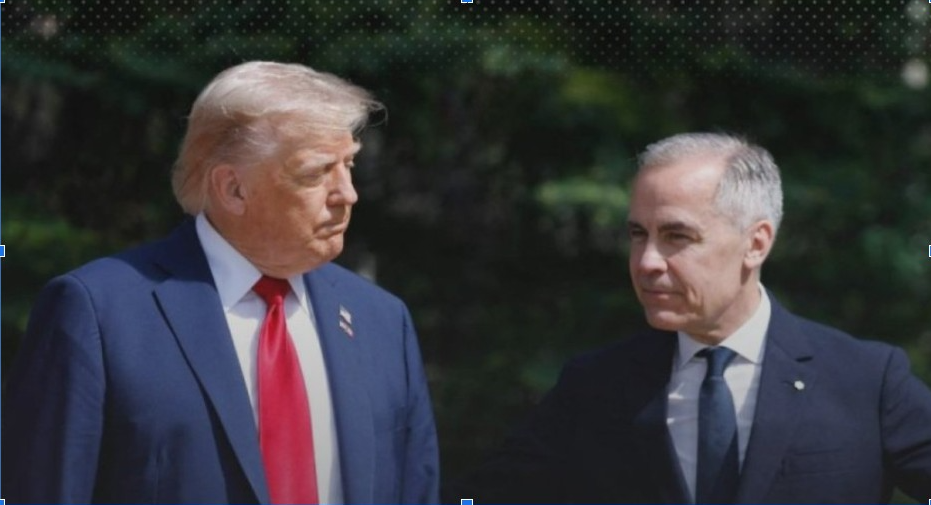
Trump’s threat is consistent with his long-standing trade philosophy, which treats tariffs not merely as economic tools but as instruments of political leverage. During his previous term, tariffs were deployed against China, the European Union, Mexico, and even Canada, despite its status as a close ally.
In Trump’s view, trade deficits represent national weakness, and aggressive tariffs are justified to protect domestic industries. His warning to Canada reflects this worldview, framing trade relationships in zero-sum terms rather than cooperative economic frameworks.
Notably, Trump went beyond economic arguments, claiming that such a China deal would “destroy Canada’s businesses, social fabric, and way of life.” This language underscores the ideological framing of the dispute, where economic decisions are portrayed as existential threats.
Canada’s Response: Defiance Without Direct Confrontation
Canadian Prime Minister Mark Carney responded carefully, avoiding direct mention of Trump while addressing the broader implications of economic pressure from abroad. In a public video message, Carney urged Canadians to support domestic production, local supply chains, and national resilience.
Carney emphasized that the agreement with China was limited in scope, focusing only on resolving specific tariff disputes rather than opening unrestricted trade. Canadian Trade Minister Dominic LeBlanc reinforced this position, stating that no comprehensive trade liberalization had occurred.
At the World Economic Forum in Davos, Carney expanded on his global economic vision, calling for middle powers to collaborate in a shifting world order. His now widely quoted remark—“If you’re not at the table, you’re on the menu”—was interpreted as a subtle critique of U.S.-centric economic dominance.
Diplomatic Fallout: U.S.–Canada Relations Under Strain
Relations between Washington and Ottawa had appeared relatively stable following Carney’s election. However, Trump’s latest comments mark a sharp reversal, reopening fault lines that had surfaced during earlier renegotiations of NAFTA, which resulted in the U.S.-Mexico-Canada Agreement (USMCA).
Trump has recently dismissed the USMCA as “irrelevant,” signaling that its upcoming renegotiation in July could become contentious. If tariffs are imposed ahead of those talks, trust between the two governments could deteriorate further.
Trump also reportedly revoked Canada’s invitation to participate in his proposed “Board of Peace,” a symbolic but telling gesture that underscores the growing diplomatic rift.
Why China Matters So Much in This Dispute
China remains the central axis of global trade tensions, particularly for the United States. Washington has spent years attempting to decouple critical supply chains from Beijing, citing national security, intellectual property theft, and unfair trade practices.
From Trump’s perspective, any ally engaging economically with China risks undermining U.S. leverage. Canada’s move—however limited—was therefore interpreted as a strategic misalignment rather than a routine trade adjustment.
Beijing, for its part, welcomed cooperation with Ottawa. The Chinese embassy in Canada stated that China was willing to work with Canada to implement agreed-upon measures, though it avoided framing the agreement as a broader geopolitical shift.
Market Reaction: Traditional Assets Stay on Edge
Equity markets responded cautiously to the tariff threat. While no immediate sell-off occurred, analysts noted increased volatility in sectors exposed to cross-border trade, including autos, metals, and industrial manufacturing.
Canadian firms with heavy U.S. exposure faced renewed uncertainty, particularly exporters reliant on the American market. Meanwhile, U.S. companies dependent on Canadian raw materials began assessing potential cost increases should tariffs materialize.
Currency markets also reflected heightened sensitivity, with the Canadian dollar showing mild weakness amid concerns of future trade barriers.
Bitcoin Slips Toward $87K as Macro Risks Rise
In the crypto market, Bitcoin briefly fell toward the $87,000–$87,500 range, reflecting increased risk awareness rather than panic selling. At the time of writing, BTC remained firmly above key long-term support levels.
Ethereum held above $2,800, while XRP traded sideways near $1.87. Overall, price action suggested consolidation rather than a decisive trend reversal.
Market analysts emphasized that crypto’s reaction was muted compared to equities, reinforcing the narrative that digital assets are increasingly viewed as macro hedges rather than purely speculative instruments.
Why Crypto Isn’t Panicking—Yet
Several factors explain crypto’s relatively calm response:
- Tariff Fatigue
Markets have grown accustomed to Trump’s aggressive trade rhetoric, often waiting for concrete policy action before repricing risk. - Lagging Macro Response
Historically, crypto tends to react after traditional markets, particularly equities and bonds, show sustained movement. - Strong Institutional Presence
Continued institutional involvement, including ETF filings and long-term allocations, has stabilized market sentiment. - Liquidity Expectations
Investors are still pricing in potential future easing cycles, which could support risk assets despite geopolitical noise.
Altcoins and Sector Performance
Altcoin performance remained mixed. Solana and BNB showed modest volatility, while TRON briefly outperformed before retracing gains. Meme coins and lower-cap assets largely tracked Bitcoin’s sideways movement.
Notably, institutional confidence remains visible. Ark Invest’s recent filing for a crypto index ETF, which includes Bitcoin, Ethereum, Solana, XRP, and Cardano, reinforced expectations of broader crypto adoption in traditional portfolios.
Regulation Delays Add Another Layer of Uncertainty
Beyond geopolitics, regulatory uncertainty continues to weigh on crypto markets. A major U.S. Senate vote on crypto legislation was recently delayed due to logistical disruptions, extending the timeline for regulatory clarity.
This delay compounds investor caution, particularly among institutions awaiting clearer compliance frameworks before increasing exposure.
In this context, Trump’s trade threats represent an additional risk factor layered onto an already complex macro environment.
Risk-Off Scenario: What Happens If Tariffs Become Reality?
If Trump follows through with 100% tariffs, the impact could extend far beyond Canada:
- Supply Chain Disruption: Autos, energy, and manufacturing sectors would face immediate cost pressures.
- Inflationary Effects: Higher import costs could feed into consumer prices.
- Market Volatility: Equities could sell off sharply, dragging risk assets—including crypto—lower.
- Currency Shifts: Safe-haven demand could strengthen the U.S. dollar, pressuring alternative assets.
Historically, such shocks have eventually affected crypto markets, often with a delay but sometimes with amplified volatility.
Canada’s Domestic Industries Brace for Impact
Canadian industries are already preparing contingency plans. Automakers, steel producers, and exporters are reassessing supply routes and pricing strategies in anticipation of possible U.S. retaliation.
The Canadian Chamber of Commerce called for calm and dialogue, emphasizing the deep economic interdependence between the two countries. “We hope the two governments can come to a better understanding quickly,” said spokesperson Matthew Holmes.
Political Theater or Economic Turning Point?
A key question for markets is whether Trump’s threat represents negotiation theatrics or a genuine policy shift. Historically, Trump has used extreme positions as leverage, later moderating his stance during talks.
However, the global context has changed. Fragmented supply chains, rising nationalism, and strategic competition with China increase the likelihood that rhetoric could translate into action.
What This Means for Crypto Investors
For crypto investors, the situation reinforces several core principles:
- Macro awareness matters more than ever
- Geopolitical shocks can arrive suddenly
- Bitcoin’s hedge narrative is being tested in real time
- Regulatory clarity remains a critical catalyst
While crypto has held firm so far, sustained trade conflict could eventually challenge bullish assumptions—especially if it triggers broader financial tightening.
Read More: What is Crypto Payment Processing?
FAQ’s
Why did Donald Trump threaten 100% tariffs on Canada?
Donald Trump threatened 100% tariffs after Canada engaged in trade talks with China, which he claims could allow Chinese goods indirect access to the U.S. market.
Is Canada signing a free trade agreement with China?
No. Canadian officials have stated the agreement only resolves specific tariff disputes and does not represent a full or formal free trade deal with China.
How could U.S. tariffs on Canada impact the global economy?
Such tariffs could disrupt North American supply chains, raise costs for manufacturers, increase inflation risks, and heighten volatility across global markets.
Why did Bitcoin fall toward $87,000 during the trade tension?
Bitcoin dipped as investors reacted to rising geopolitical and trade uncertainty, although the move was limited due to continued institutional interest and strong market structure.
Could trade wars significantly affect cryptocurrency markets?
Yes. While crypto often reacts later than traditional markets, prolonged trade conflicts can trigger risk-off sentiment, reduced liquidity, and increased volatility in digital assets.
Conclusion
Donald Trump’s threat to impose 100% tariffs on Canada marks a significant escalation in global trade rhetoric, with implications extending well beyond North America. While markets have so far treated the warning cautiously, the risk of follow-through remains real.
Crypto markets, led by Bitcoin, have shown resilience, but not immunity. As geopolitical tensions intersect with regulatory delays and liquidity uncertainty, investors across asset classes are entering a wait-and-see mode.
Whether this episode becomes another chapter in political brinkmanship or the start of a renewed trade war will depend on actions taken in the coming weeks. Until then, both traditional and digital markets remain on alert—balancing optimism against an increasingly complex global landscape.