


Key Insights
- Ethereum (ETH) network usage surged, with active addresses more than doubling in recent weeks.
- Ethereum ETFs recorded their first positive weekly inflows since October 2025, signaling renewed institutional interest.
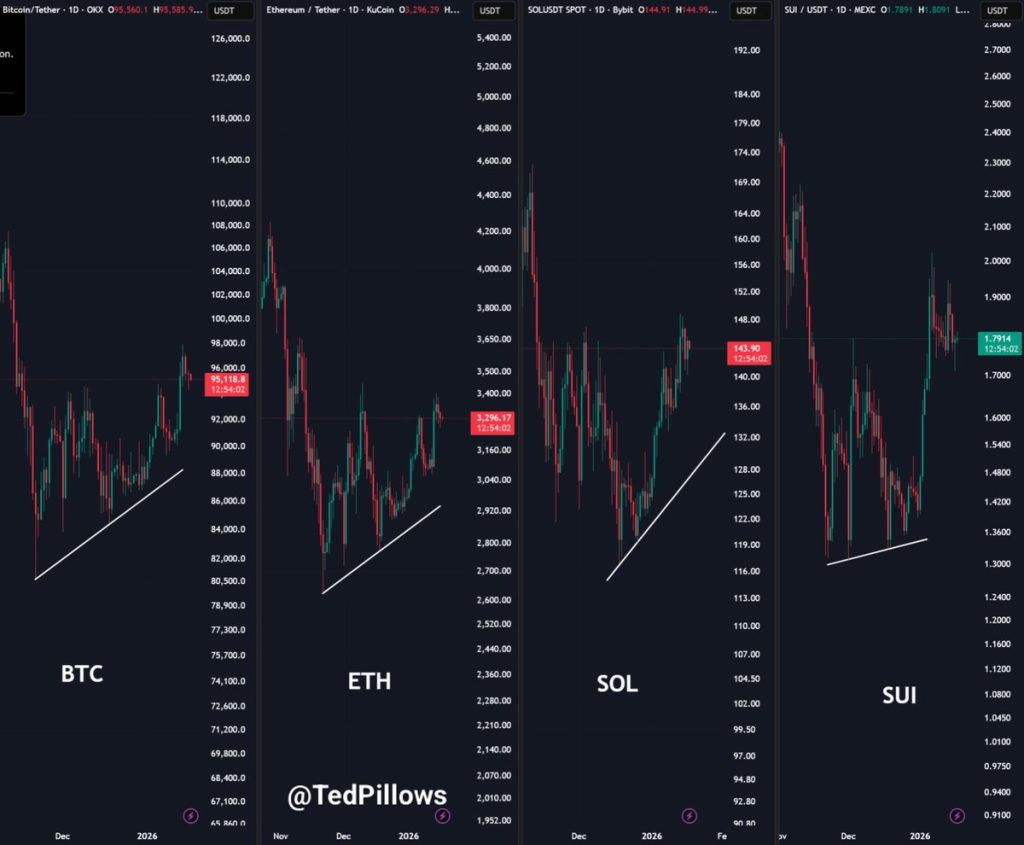
- ETH and other major cryptocurrencies, including Bitcoin (BTC), Solana (SOL), and Sui Network (SUI), are holding above key trendline supports.
- Despite moderate price movement in recent weeks, structural and on-chain signals suggest that bearish bets on Ethereum may be premature.
- The combination of network activity, institutional inflows, and technical support points toward potential bullish momentum in the near term.
Introduction: Ethereum’s Current Market Landscape
Ethereum, the second-largest cryptocurrency by market capitalization, has remained one of the most actively traded and utilized networks in the blockchain ecosystem. While its price has demonstrated slight bullish tendencies since the beginning of the year, it has struggled to sustain a strong rally. Despite this, key market indicators—ranging from on-chain activity to ETF flows—suggest that betting against Ethereum right now could be a strategic error.
- Key Insights
- Introduction: Ethereum’s Current Market Landscape
- Ethereum Network Activity Surges
- Institutional Investment: Ethereum ETFs Record Inflows
- Ethereum Price Holding Above Key Trendline Support
- Ethereum’s Broader Market Context
- Why Betting Against Ethereum May Be Premature
- Potential Scenarios and Price Targets
- FAQ’s
- Why is betting against Ethereum right now considered risky?
- How has Ethereum’s network activity changed recently?
- What impact do Ethereum ETF inflows have on the market?
- What are the key support levels for Ethereum?
- Could Ethereum still face short-term corrections?
- How does Layer-2 adoption affect Ethereum’s price?
- What are the potential price targets for Ethereum?
- Conclusion
This analysis examines three primary factors that make Ethereum a compelling asset for investors: surging network activity, renewed institutional inflows, and price holding above critical trendline supports. By understanding these factors in detail, traders and investors can gain a clearer view of ETH’s potential trajectory in the coming months.
Ethereum Network Activity Surges
Active Addresses More Than Double
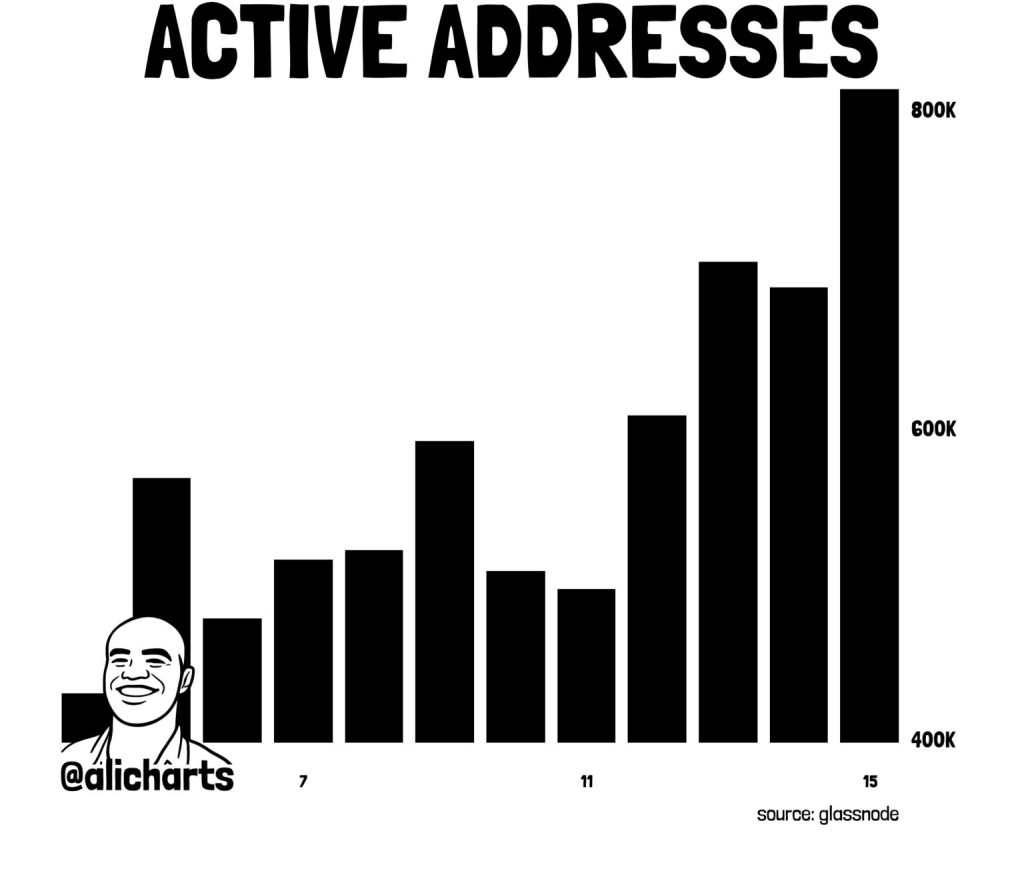
One of the most important indicators of network health and adoption is the number of active addresses. According to data reported by Ali Charts on X, Ethereum now boasts over 800,000 active daily addresses, more than double the number from previous weeks.
This surge in activity reflects increased engagement across multiple use cases:
- Decentralized Finance (DeFi): Ethereum remains the dominant platform for DeFi applications, which facilitate lending, borrowing, and automated market making.
- NFT Activity: Non-fungible tokens continue to be a major driver of network usage, from trading collectibles to launching innovative digital assets.
- Layer-2 Scaling Solutions: Ethereum’s growing layer-2 ecosystem, including Optimism, Arbitrum, and Polygon integrations, has allowed users to transact more efficiently at lower costs.
Higher active addresses indicate that more participants are engaging with the Ethereum ecosystem, suggesting a healthy and growing user base.
Transaction Fees Hit Record Lows
Another notable aspect of the network activity is that transaction fees recently reached all-time lows, even as usage surged. This was largely facilitated by the adoption of Layer-2 scaling solutions, which help reduce congestion on the Ethereum mainnet.
Lower transaction costs enhance user experience, making Ethereum more accessible to both retail and institutional investors. The combination of high usage and low fees signals that Ethereum is operating efficiently, supporting its long-term growth potential.
Implications for ETH Price
Increased network activity can be a bullish indicator for ETH prices for several reasons:
- Higher demand for ETH: As network activity rises, more ETH is required for transaction fees, staking, and other on-chain operations.
- Investor confidence: Strong usage signals market confidence in Ethereum’s relevance and utility.
- Potential for capital inflows: Increased network adoption may attract institutional capital seeking exposure to a fundamentally strong asset.
However, this bullish outlook depends on the sustainability of network activity. If the surge is temporary or speculative, it could lead to increased volatility and price corrections.
Institutional Investment: Ethereum ETFs Record Inflows
Renewed Interest in Ethereum ETFs
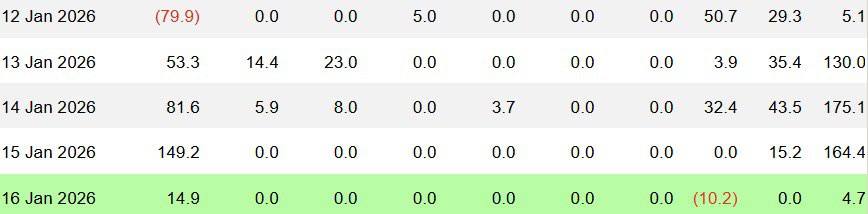
Institutional interest in Ethereum has also contributed to a positive market outlook. According to Farside Investors, Ethereum spot ETFs saw net inflows of approximately $479.3 million over the past week—the first positive weekly inflows since October 2025.
Despite some minor outflows, the overall trend indicated strong demand:
- January 12: BlackRock recorded $79.9 million in outflows, reflecting short-term selling pressure.
- January 13: Inflows surged to $130 million, led by BlackRock, reversing previous outflows.
- January 14-15: Net inflows reached $175.1 million and $164.4 million, respectively, confirming robust institutional interest.
- January 16: Inflows slowed to $4.7 million, signaling a temporary cooling but maintaining overall net positive flows.
Why ETF Flows Matter
Institutional flows into ETFs can significantly influence ETH prices:
- Liquidity Lock-Up: Institutional purchases lock up ETH, reducing available supply in the open market.
- Price Support: Continuous inflows create upward pressure on prices, as demand outpaces short-term supply.
- Market Confidence: ETF activity indicates that professional investors are placing confidence in Ethereum as a long-term asset.
Potential Risks
ETF inflows are encouraging, but occasional outflows suggest that some investors are actively taking profits. This introduces a risk of short-term volatility. Additionally, market sentiment can shift rapidly, especially if macroeconomic conditions or regulatory developments affect institutional appetite for crypto assets.
Ethereum Price Holding Above Key Trendline Support
Technical Overview
Ethereum’s price has recently been holding above a rising trendline that has been in place since the lows in December. At the time of writing, ETH was trading around $3,296, with support around $3,200–$3,250.
The following trends were observed:
- Higher Lows: Buyers have consistently defended the upward trendline, suggesting ongoing market confidence.
- Correlation With Major Assets: Other major cryptocurrencies, including BTC (~$95,000), SOL (~$144), and SUI (~$1.79), are also maintaining positions above their respective trendline supports, indicating market-wide stability.
- Short-Term Targets: If ETH maintains support, upward momentum could push prices toward $4,200, reflecting continuation of the current bullish structure.
Risks to Trendline Support
While the trendline support is intact, risks remain:
- Break Below Support: A daily close below $3,150 would invalidate the bullish setup and potentially push ETH toward $2,900.
- Market Volatility: Broader market fluctuations, including BTC movements or macroeconomic shocks, could challenge ETH’s technical support.
- Profit-Taking: Investors may sell at key resistance levels, creating short-term downward pressure.
Ethereum’s Broader Market Context
Ethereum’s performance is influenced not only by its own fundamentals but also by the broader crypto market and macroeconomic environment.
- Bitcoin Correlation: ETH remains highly correlated with BTC. BTC stability around $95,000 supports ETH, while any BTC decline could exert pressure.
- Layer-2 Developments: Growth in Layer-2 solutions reduces network congestion, lowers fees, and increases adoption. This enhances Ethereum’s utility and market perception.
- Institutional Adoption: ETFs, staking products, and custody solutions provide investors with easier access to ETH, increasing demand.
- Regulatory Landscape: Global regulations, especially in the U.S., can affect investor sentiment. Positive clarity supports inflows, while regulatory uncertainty may trigger outflows.
Why Betting Against Ethereum May Be Premature
Considering the above factors, there are multiple reasons why bearish bets on Ethereum might be ill-timed:
- Surging Network Activity: The doubling of active addresses indicates a strong, engaged user base, supporting ETH demand.
- Institutional Flows: ETF inflows of nearly $480 million demonstrate renewed confidence in Ethereum among professional investors.
- Technical Support: ETH is holding above trendline support, showing resilience and ongoing buyer defense.
- Broader Market Stability: Major cryptocurrencies are maintaining their trendline supports, suggesting a relatively stable market environment.
- Reduced Fees and Layer-2 Adoption: These improvements make Ethereum more accessible and efficient, encouraging further adoption and usage.
While short-term risks exist, including potential profit-taking, volatility, and macroeconomic shocks, the convergence of these factors suggests that Ethereum may continue to see upward momentum in the near term.
Potential Scenarios and Price Targets
Bullish Scenario
- ETH holds above $3,200–$3,250 trendline support.
- Continued network usage growth and ETF inflows drive demand.
- Price moves toward $3,500–$3,800 in the short term, with a potential target of $4,200.
Bearish Scenario
- ETH closes below $3,150, breaking trendline support.
- Short-term price target could be $2,900.
- Market volatility and macroeconomic factors may exacerbate the decline.
Neutral Scenario
- ETH consolidates between $3,200–$3,350 as market participants digest recent inflows and adoption trends.
- Sideways movement could last until further catalysts emerge, such as regulatory clarity or Layer-2 adoption news.
Read More: Polygon Price Poised for Breakout: 3 Signals Suggest POL Upside
FAQ’s
Why is betting against Ethereum right now considered risky?
Ethereum is experiencing strong network growth, renewed institutional ETF inflows, and price holding above key trendline supports, signaling potential bullish momentum.
How has Ethereum’s network activity changed recently?
Active daily addresses have more than doubled in recent weeks, surpassing 800,000, reflecting increased usage across DeFi, NFTs, and Layer-2 scaling solutions.
What impact do Ethereum ETF inflows have on the market?
ETF inflows lock up supply, create upward price pressure, and indicate institutional confidence, which can drive further demand for ETH.
What are the key support levels for Ethereum?
ETH is currently trading above the $3,200–$3,250 zone, following an upward trendline since December. A break below $3,150 would invalidate the bullish structure.
Could Ethereum still face short-term corrections?
Yes. Profit-taking, minor outflows from ETFs, and market volatility could trigger short-term price fluctuations, despite the overall bullish outlook.
How does Layer-2 adoption affect Ethereum’s price?
Layer-2 solutions reduce transaction fees and congestion, making ETH more accessible, boosting adoption, and supporting price appreciation.
What are the potential price targets for Ethereum?
If bullish momentum continues, ETH could move toward $3,500–$3,800 short-term, with potential long-term upside near $4,200.
Conclusion
Ethereum’s combination of on-chain activity, institutional inflows, and price structure suggests that it is well-positioned to maintain bullish momentum.
- Network Usage: Doubling of active addresses demonstrates adoption and utility.
- ETF Inflows: Institutional demand locks up supply and supports price appreciation.
- Trendline Support: ETH continues to hold above key technical levels, with higher lows reinforcing market confidence.
While risks remain, including short-term corrections and broader market volatility, the convergence of these bullish signals indicates that betting against Ethereum at this stage may be a strategic mistake. Investors and traders should monitor network activity, ETF flows, and trendline levels to gauge ETH’s short- and medium-term trajectory.
Ethereum is not only maintaining structural strength but also showing signs of renewed investor confidence, making it one of the most resilient assets in the current cryptocurrency market.